Keeping Your Dog Safe While Training In The Heat

As the summer heat intensifies, training dogs safely becomes a paramount concern for professional trainers and pet owners alike. I’m John McCarter, owner and lead trainer at Bayou Gundog in Knoxville, Arkansas. With over three years of full-time experience and a background in healthcare, I’m here to share my practical and lifesaving advice on how to keep our canine companions safe during the hottest months of the year.

A Bit About Me

I’ve been running Bayou Gundog for over three years now, after a few years of part-time training while working as a registered nurse. My healthcare background gives me a unique perspective on animal health and physiology, which is crucial for maintaining the well-being of the dogs I train. Currently, I oversee the training of 30 dogs: 20 advanced dogs are set to travel with me to Michigan for the summer, while 10 younger dogs will stay in Arkansas with my assistant trainer, Charli Reddell.

Tips for trainign dogs in the heat

The Challenges of Training Dogs in the Heat

Training dogs in extreme heat requires meticulous planning and a keen eye for safety. My daily routine starts as early as 5 AM to take advantage of the cooler morning hours and maximize training efficiency before the heat sets in. Given the rapid increase in temperature and humidity here in Arkansas, this early start is crucial.

To ensure the safety of the dogs, I follow a structured approach encapsulated in the acronym SWAT: Shade, Water, Airflow, and Temperature.

1. Shade:
Providing shade is essential. I park my trailer in shaded areas, use natural shade from trees, and set up umbrellas or canopies when natural shade isn’t available. Keeping dogs out of direct sunlight reduces the risk of overheating.

2. Water:
Constant access to cool water is vital. I ensure that water is available throughout the day, adding ice in the morning to keep it cooler for longer. Proper hydration is crucial not just during training but beforehand as well.

3. Airflow:
Maintaining proper airflow helps in cooling the dogs. I use fans, keep my truck’s AC running, and position my trailer to take advantage of wind direction. These measures ensure the dogs remain cool during and after training sessions.

4. Temperature Monitoring:
Using Bluetooth and Wi-Fi thermometers, I remotely monitor the temperature inside my trailer. This constant vigilance ensures that the dogs are not exposed to extreme heat.

Tips for trainign dogs in the heat

Recognizing and Managing Overheating in Dogs

Recognizing the signs of overheating in dogs can prevent serious health issues. I look for symptoms such as excessive panting, loss of focus, and changes in the color of their tongues and gums. Immediate action is necessary when these signs appear.

To cool an overheated dog, I advise against using very cold water or ice, as it can cause blood vessels to constrict, worsening the situation. Instead, use cool water, place the dog in a shaded area, and use fans. Rubbing alcohol on the dog’s pads can also help due to its cooling properties. Being prepared and having a plan in place for such situations is crucial to avoid serious health issues or fatalities.

Precautions and Additional Considerations

Dogs do not sweat like humans; they cool themselves primarily through their mouths and pads. During training, it’s essential to limit the time a dog carries a bird or bumper to avoid obstructing their primary cooling mechanism. Shorter, more frequent training sessions are advisable during hot weather.

The age and overall health of the dog also play a significant role in how well they handle heat. Older dogs, puppies, and those with health issues are more vulnerable and require extra care.

Personal Experiences and Final Thoughts

I’ve had personal experiences that highlight the importance of these precautions. I recall instances where dogs, driven by their instinct to please and play, have pushed themselves to the point of collapse. This underscores our responsibility as trainers and owners to prioritize the dogs’ well-being over training goals, especially in extreme weather conditions.

My expertise and structured approach provide a comprehensive guide for dog trainers and owners to follow, ensuring that their dogs remain healthy and safe even in the hottest conditions. My passion for the subject and commitment to animal welfare drive me to share this detailed advice.

By adopting my SWAT approach and being vigilant about the signs of overheating, you can ensure a safe and enjoyable training experience for your furry companions, even in the sweltering summer heat.

What is force fetch

What Is Force Fetch?

Force fetch is a crucial training technique in the world of retrievers, helping to instill discipline and resilience in dogs. This method is essential for any dog handler who aims to develop a well-rounded and obedient retriever, capable of handling various challenges in both training scenarios and real-world hunting situations. In this article, we will delve into what force fetch is, why it is important, and the step-by-step process to implement it effectively.

Force fetch, also known as “force breaking” or “trained retrieve,” can be understood in two key aspects:

Part One: The Common Understanding

The first part of force fetch is what most people envision: training a dog to retrieve an object, such as a bird or bumper, and deliver it directly to the handler’s hand. This involves the dog leaving the handler’s side, picking up the object, and returning promptly without dropping, playing, or shaking off water. The goal is a seamless retrieve where the dog understands the task, and performs it efficiently and consistently.

What is force fetch
Screenshot

Part Two: The Deeper Purpose

The second, and arguably more important, aspect of force fetch is teaching the dog to cope with pressure. This includes understanding and responding to pressure, learning how to turn it off, and overcoming difficulties. This process builds a resilient, confident dog with the ability to tackle more advanced training tasks. It equips dogs with the mental tools to push through challenging situations, be it in a hunt test or out in the field during a real hunt.

Why is Force Fetch Important?

Force fetch lays the foundation for a dog’s advanced training and overall behavior. It teaches problem-solving skills and how to deal with adversity. Here’s why it’s essential:

  • Resilience: Dogs learn to work through discomfort and pressure, becoming more resilient.
  • Consistency: It ensures reliable performance in retrieves, crucial for hunting and competition.
  • Foundation for Advanced Training: Skills learned during force fetch are foundational for more complex training, such as pile work, T-patterns, and blind retrieves.
  • Mental Discipline: Dogs develop a higher threshold for pressure, making them eager and willing to perform tasks even when conditions are less than ideal.

The Force Fetch Process: A High-Level Overview

Force fetch involves a series of steps that gradually teach the dog to understand and respond to commands and pressure. Here’s a high-level look at the process:

Step 1: Hold

The initial step in force fetch is teaching the dog to hold an object in its mouth calmly. This can be done on a table or the ground. The handler starts by placing their fingers or a soft object, like a paint roller, in the dog’s mouth, encouraging the dog to hold it without chewing or spitting it out. This stage focuses on the dog relaxing and accepting the object.

Step 2: Introduction to Pressure

Next, the dog is introduced to slight discomfort through the ear pinch or toe hitch methods. The handler applies pressure to the dog’s ear or toe, while simultaneously introducing a bumper into the dog’s mouth. When the dog takes the bumper, the pressure is released. This teaches the dog that holding the object turns off the pressure.

What is Force Fetch

Step 3: Fetch Command

Once the dog understands holding, the fetch command is introduced. The dog learns to reach for the object to relieve the pressure. Initially, the handler places the object in the dog’s mouth, but eventually, the dog will begin to reach for it proactively.

Step 4: Movement and Retrieval

The training progresses to having the dog move to fetch the object. This can be done on a table or the ground, with the dog learning to pick up objects placed at increasing distances. The dog is also taught to deliver the object to the handler’s hand, reinforcing the complete retrieve process.

Step 5: E-Collar Conditioning

To reinforce the training, an e-collar is introduced, providing a consistent form of pressure that the dog can learn to respond to. The collar is used alongside the ear or toe pressure initially, and then gradually, the dog learns to respond to the e-collar alone.

Step 6: Force to Pile

The final stages involve force to pile exercises, where the dog retrieves objects from a distance, reinforcing the fetch command under varying conditions and distances. This step transitions the dog to more complex tasks and sets the stage for advanced training.

How can I learn more about Force Fetch?

There’s lots of available resources online. To see a step-by-step guide, check out the How To Teach Force Fetch course that walks a handler through the process, step-by-step, and using varying breeds of dogs.

Bob Owens duck hunting

Bob Owens is a profession gun dog trainer, owner of Lone Duck Kennels, and host of Lone Duck’s Gun Dog Chronicles. He resides in New York, where he runs AKC hunt tests and field trials in the summer, and travels to South Carolina in the winter.

lifetime hunter

Confessions of a Tree-hugging Anti-hunter 

How an anti-hunter was converted to a lifetime hunter

By PJ DelHomme

Before making a career out of writing about hunting and conservation, I was adamantly opposed to the idea of hunting. In part one of this two-part series, I step into the confessional to explain why I never wanted to eat Bambi or cut down a tree. 

When I was a freshman in college in Mobile, Alabama, I remember my dad telling me in a rambling conversation that two duck hunters had gone missing in Mobile Bay. “Chalk two up for the ducks,” I said. It was a heartless comment that illustrated my flippant attitude toward human life and my feelings about hunting. 

After my freshman year, I moved to Montana for a summer to work. The West set its hook in me hard, and I promptly dropped out of school to figure out life away from humidity, gumbo, and sweet tea. I immersed myself in the world of natural resources. I worked on Forest Service crews with guys who hunted elk with a bow and arrow. I hiked through timber stands, marking trees for removal. I lived in a small town where people hung their deer and elk from a sturdy tree in the backyard when the weather was cool. All the while, I was just smart enough to keep my mind open and my mouth mostly shut. 

Hunting isn’t an afterthought in Montana. It’s ingrained in the culture. It’s just what people do to put meat in the freezer. I was intrigued 20 years ago, and I still am today. 

Back in Alabama, one had to belong to a hunting club to hunt. We had little to no public land where I grew up. In Montana, people just park the truck and start walking. My mind was, and continues to be, blown. I liked to hike, and I liked to eat meat. It made sense that I would try to make my own meat, but how? I started by learning from the inside out. 

One fall, I got a job working at a wild game processor in Bozeman. I slung all kinds of meat for 10 hours a day: elk, bison, pronghorn, deer, moose, and bear. One time, a guy brought in a llama and thought it was an elk, but that’s a story for another time. I spoke to the hunters, and most seemed like good people. They were tired but happy. Most had respect for the animals they brought us because the carcasses were fresh and clean.

After learning how to break down an animal into chops, steaks, and burger, I borrowed a .30-06 and took to the hills. It took me a few years and a mentor from my Forest Service days to figure out the hunting thing. It was an evolution that I could not have done on my own. There are real barriers to hunting and making new hunters. I was/am what they call an adult-onset hunter, and I overcame the bias I carried for hunting before I moved to the promised land. I’ve thought a lot about why I didn’t like hunting as a kid. I do not doubt that if I still lived in Alabama, I would be slapping a Sierra Club sticker on a Prius before chaining myself to a feller buncher somewhere in protest. Here are a few reasons that might help explain why I was an anti-hunter. 

  1. Non-hunting Family 

Hunting isn’t like baseba,ll where a few friends get together and play a game. You need a weapon. You need habitat. You need a mentor to show you what to do if you kill something. My dad showed me how to do things, but hunting was not one of them. Hunting simply was not part of who we were as a family. And that’s fine. I found hunting on my own, but I wasn’t exposed to it through an uncle or grandparent. As a result, I formed my own opinion on it because of societal labels, and that’s a problem. See #2. 

  1. Hunting’s Image 

I grew up on Looney Tunes, which included Elmer Fudd chasing that wascally wabbit. Even though I knew it was a cartoon, it validated my preconceived notions about hunters. I still remember seeing Bambi in theaters as a seven-year-old. You think that scarred me? Hell, yes, it did. But it wasn’t just when I was a child. 

When I was in my teens, hunting shows started going mainstream. I recall sitting at a friend’s house flipping channels, and we landed on an unsuspecting turkey strutting around. Cool, we thought, a nature show. There was a BOOM, and the turkey’s head exploded. Two camo-clad and face-painted hunters emerged from the bushes, high-fiving and yucking it up with a Southern drawl that put mine to shame. We looked at one another in horror. With few exceptions, hunting shows have not evolved. They still suck. 

  1. Access to Land 

As a high school kid, I desperately wanted to be outdoors. You can go outside in the South, but you better know how to play football. I remember driving to a state park in nowhere Mississippi just to find a place to hike, but we never found the trailhead. We went to New Orleans that day instead. My folks didn’t have the money or contacts to belong to a hunting club, which means you don’t hunt. Because I had limited access to public land, I had developed an unrealistic ideal that all land should be pristine, never hunted and never harvested. Just let nature take its course, I thought. Only after I moved to Montana did I learn first-hand that natural resources can be used wisely to last generations. 

In part two, I’ll examine how hunters can help tree-hugging anti-hunters understand that hunting is not evil. We can do a few things to tell the world that we’re not all Elmer Fudd wannabes. In fact, there is a whole lot that Americans (even hunters) don’t know about hunting and its contributions to the greater good. Stay tuned. 

Deer hunting cell cams

The Great Trail Camera Debate

Why Some Say They Give Hunters an Unfair Advantage 

Let’s say a hunter has a network of cellular trail cameras placed in the woods where she can monitor the activities of wildlife, such as whitetail deer, passing by. She chooses the locations of these trail cameras based on what she knows about whitetail deer patterns and preferences to optimize the amount of images she will capture. Her cameras pick up regular deer patterns, and she notices a nice shooter buck passing by the same hardwood-lined runway around dusk every few days. She plans to hunt that area on her day off, which she does, and she harvests that target buck. Is this unethical? Is this fair chase? Would it have mattered if her trail camera wasn’t a cellular kind, which sends information remotely, but rather the kind that needs to be manually checked with a card reader?

Hunting can be challenging, and many hunters prefer that. Some might argue that hunting is inherently  challenging, with or without modern tools. Others might argue still that it is irrelevant just how challenging the process of hunting is, because it’s about self-sufficiency and procuring wild food, and not about the logistics or thrill of the hunt. 

Do cellular trail camera give hunters an unfair advantage in this process? Some hunters think they do, while some do not. 

Many states have regulations governing the use of cellular trail cameras. In Alaska, there is a limit on the amount of information hunters are permitted to receive via trail cameras during active hunting seasons. In New Hampshire, the law prohibits hunters from killing an animal on the same day it showed up on a trail camera. Kansas, for example, has banned the use of the devices on all public lands. Some states, such as Arizona, have outright banned the use of any trail camera devices.

What do trail cameras do?

Trail cameras are electronic devices that are placed afield to observe what is happening in an area with minimal disturbance to wildlife. Sensors alert the camera to take photos whenever it detects an animal passing by (or sometimes a wayward tree branch or high gust of wind). Cellular trail cameras are equipped to be connected to a cell phone and transmit images and/or video remotely. Non-cellular trail cameras require the user to physically travel to the camera to manually check the images, which are saved on an SD card for later viewing.  

Do Trail Cameras Violate the Rules of Fair Chase? 

Trail cameras give hunters the ability to see an animal in a dated and time-stamped image before they see it in person. That is what they are designed to do. Some hunters argue that this violates the rules of fair chase because they believe all hunters should have an equal opportunity to shoot the game without interference from technology. 

Let’s take a look at the rules of fair chase, as defined by Pope and Young. The term fair chase refers to the ethical, sportsmanlike, and lawful pursuit of free-ranging wild game animals that does not give the hunter an improper or unfair advantage over the animal.

That means, according to Pope and Young, that no animals shall be taken under the following conditions: helpless in a trap, deep snow or water, or on ice; from any power vehicle or power boat; by jacklighting or shining a light at night; by the use of tranquilizers or poisons; while inside any escape-proof fenced enclosures; by the use of electronic devices for attracting, locating or pursuing game or guiding the hunter to such game, or by the use of a bow or arrow to which any electronic device is attached, with the exception of lighted nocks and recording devices that cast no light towards the target and do not aid in rangefinding, sighting, or shooting the bow. 

Most of these rules are straightforward, black or white, and without any wiggle room. But when it comes to trail camera use, it appeared to hunters that there was some gray area. 

The question of whether trail cameras violate these rules came up so often that the two main authorities in deer hunting, Pope and Young and Boone and Crockett, came together to release a joint statement on the matter. The statement read:

“The use of any technology that delivers real-time location data (including photos) to target or guide a hunter to any species or animal in a manner that elicits an immediate (real-time) response by the hunter is not permitted.”

The key component here is if the advantage of cellular trail cameras has an immediate effect on what action the hunter takes, and if that leads to a kill. So, for example, if a hunter receives an image on her phone from her cellular trail camera of a deer making its way toward a specific food plot, and she drops what she’s doing to immediately get to the food plot at the same time as the deer and proceeds to harvest that deer, that’s a real-time response. 

More recently, Boone and Crockett dug even deeper to clarify its stance. 

“Trail cameras can be a helpful tool in game management and selective hunting,” a statement read. “The use of any technology that delivers real-time location data (including photos) to target or guide a hunter to any animal in a manner that elicits an immediate (real-time) response by the hunter is not permitted. ‘Real time’ is the key concept. Seeing a photo and harvesting an animal a few hours later, or even the same day, uses this technology to assure a kill. It also takes advantage of the animal, which cannot detect impending danger from a camera. Waiting several days, or even until the following season, to pursue an animal captured on camera is different, and would not be deemed an unethical use of a trail camera.”

So to be clear, the use of trail cameras, even cellular trail cameras, in this definition, is not prohibited or deemed unethical. It’s that real-time response that is. 

“Technically, the reason we revisited the rule was because, as written, if you’ve followed a buck for four years on camera and the first pic of him years ago was on a cell cam, that buck was disqualified. We didn’t want that,” Justin Spring, formally of Boone and Crockett but current director of Pope and Young, said. “We just want hunters to think about the questions of fair chase. Is the use of this technology ensuring a harvest? Not giving an animal time to escape? We make hunters read and sign the (fair chase) affidavit, but at the end of the day, it comes down to the honesty of the hunter.”

Boone and Crockett’s in-depth statement covered more than just the use of trail cameras. It also touched on other advantages, as they defined them, such as drones, thermal night scopes, baiting, scent-attractants, and two-way radios or texting another hunter, and smart riflescopes. 

Our Hot Take on the Trail Camera Debate

Hunting regulations differ from region to region and from state to state, as do hunting styles and techniques. As time has passed, hunting has evolved with it. Modern technology has changed a lot about how we hunt, and of that there is no doubt. In many ways, it has given hunters an edge that wasn’t available a generation ago. 

These advancements inevitably bring up questions. It is healthy to explore different perspectives on modern advantages, such as trail cameras. There is no harm in respectful, thoughtful debate. 

This author believes there is nothing wrong with using trail cameras within legal limits. Like anything, trail cameras are another tool in the hunting arsenal. They offer insight into wildlife in a way that is noninvasive and doesn’t interrupt their normal routine. Use them as they are intended to be used, follow the law, and enjoy the experience. 

The Great Trail Cam Debate: Why Some Say They Give Hunters an Unfair Advantage
Wisconsin Waterfowl Association restoration

Wisconsin Waterfowl Association Announces New to Improve and Restore Public Lands

The Wisconsin Waterfowl Association (WWA) has embarked on an ambitious initiative aimed at enhancing and restoring public lands across Wisconsin, particularly those that serve as critical habitat for waterfowl. With Wisconsin home to 1.4 million acres of public land utilized for hunting and recreation, the initiative addresses the urgent need for restoration in areas that have become unproductive.

In 2023, the WWA brought on board two restoration ecologists dedicated exclusively to improving public lands. Their mission is to improve habitat and restore wetlands, ensuring the health of waterfowl populations and enhancing hunting success. The initiative, in partnership with the Wisconsin Department of Natural Resources (DNR), focuses on identifying restorable wetlands and expanding wild rice beds, especially in the state’s ceded territories.

Wisconsin habitat restoration through Wisconsin Waterfowl Assocation

This multi-year partnership has already made significant strides, with over 150 public properties reviewed and several restoration projects planned or underway. The first major project involves restoring 16 acres of wetlands at the Navarino Wildlife Area in Shawano County, with additional projects totaling nearly 225 acres in the planning and design stages at other wildlife areas across the state. Additionally, the initiative has seen success in expanding wild rice beds—a crucial food source for wildlife that has been in decline. In 2023, volunteers collected and seeded 1,730 pounds of wild rice in priority waters.

Wisconsin has lost approximately 50% of it’s wetlands due to drainage, agriculture, development, and incompatible land use practices. These projects aim not only to restore the ecological balance but also to enhance water retention to mitigate flooding, improve groundwater filtration, and reduce erosion.

The funding for these positions comes from various sources, including the Fund for Lake Michigan, the James E. Dutton Foundation, the Wisconsin Bird Fund, and proceeds from the annual Waterfowl Hunters Expo.

Bruce Ross, the Executive Director of WWA, highlighted the organization’s long-standing commitment to habitat conservation. “For 40 years, the WWA has been working to create better habitat, educate and advocate for waterfowl hunters here in Wisconsin. We are excited to expand our efforts to increase habitat
for wildlife and provide an even better experience for hunters in Wisconsin.” You can learn more from Bruce on a recent episode of the UpDuck Podcast where he goes in depth on these initiatives, a potential crane hunt in Wisconsin, and many other topics.

The Wisconsin Waterfowl Association is a state-based non-profit conservation organization dedicated to the conservation of Wisconsin’s waterfowl and wetland resources. Since 1984, WWA has worked to restore critical habitat in Wisconsin, educate the next generation of waterfowl hunters, and advocate for policies that protect Wisconsin’s resources and the rights of citizens to hunt.

Hunters of Color

Hunters of Color is Growing and Expanding 

Quick – what does a hunter look like? If your first thought was a white guy in camouflage, you’re not alone. Hunting has long been marked by a lack of diversity, but an organization called Hunters of Color has been working for the past few years to change that preconception. 

The origins of Hunters of Color trace back to when former executive director Lydia Parker, current executive director Jimmy Flatt, and founder Thomas Tyner were just three undergrads at Oregon State University. 

They were passionate hunters trying to navigate a community that didn’t always feel welcoming. The statistics were alarming: 97% of hunters in the nation were white, with only 3% of hunters that identified as black, indigenous, or people of color, (BIPOC), according to the U.S. Fish and Wildlife Service. 

The group set a goal to foster an outdoor community where people of color feel empowered to participate in hunting and conservation proportionately according to the demographics of the nation and to dismantle the barriers that kept people of color from participating in hunting, such as lack of access to education, gear, mentorship, and land. In the United States, 98% of private land is owned by white Americans, according to the USDA. 

Within the first few years of operation, Hunters of Color has grown tremendously, linking a network of ambassadors throughout the country and reaching thousands of new hunters to the resources they need to begin hunting. 

“In 2022 we had 1023 participants at our events and in 2023 we had over 1300 participants at our events,” Hunters of Color Executive Director Jimmy Flatt said. “We have expanded into 5 new states making the total to 14 states with community leaders. Our members come from all 50 states and as we work to build capacity and expand our events to more states we encourage people to find ways to get involved through the community website.”

Hunters of Color is a membership-based organization. People who might be interested in a HOC membership are either someone with hunting/conservation knowledge or someone seeking to obtain said knowledge. All of this is intending to build the most welcoming and inclusive environment for hunters to engage and share their hunting cultures. 

This past year Hunters of Color launched the Hunters of Color Community website; a place for everyone to gather virtually and work towards achieving the mission of Hunters of Color. The platform is essentially a social media where members can connect with other members, find a mentor, become a mentor, register for events, find industry discounts from the organization’s  partners, gain access to educational materials, share their stories, or ask questions. 

“It’s really a powerful tool and we are actively looking for people to join the network and find a way to engage,” Flatt said.

The work they have put in is showing real-world dividends, and the folks at Hunters of Color aren’t slowing down any time soon. 

“The most recent demographic study from the USFWS shows an upward trend in BIPOC participation in hunting which means that our efforts are having a measurable impact,” Flatt said.  “That being said, we still have a long way to go and need as many people to help us in our mission. We will continue to establish opportunities for communities of Color to establish a connection to the land/culture and need more partners helping us in this effort.”

Tag drawing system

Limited-entry Draw Tags: I Quit

PJ DelHomme – Okayest Media Contributor

I’ve played the tag lottery enough not to care anymore. In the last couple of years, I’ve been more excited to draw an extra doe tag than anything else. How can this be? What kind of hunter wouldn’t want to hunt for the biggest bucks, bulls, and rams? 

‘Twas the night before Montana’s limited-entry tag draw deadline, when all through the house, not a creature was stirring, except for me in the basement sitting in front of the computer. Before me on my screen, in all its glory, was 15 years’ worth of playing the points game—13 points for elk, 10 points for sheep, moose, and goat. 

I halfheartedly looked through the regs, thinking about where to apply. Then, I lost all interest and motivation. I closed the laptop and went to bed. I am what they call a quitter. And I’m okay with that. 

What are Draw Tags? 

Most states manage consumable wildlife like big game for residents and revenue. Tags and licenses generate money to keep the lights on and manage wildlife resources and their habitat.

Where I live in Montana, managers set aside some hunting units for opportunity, meaning I can hunt for a bull elk every year. In other units, the state offers a very limited number of tags for bulls, which means it’s a coveted trophy area. For those units, there is a high demand for a finite resource, which means not everyone gets a tag. In fact, the odds of drawing some units are less than one percent.

It’s not just Montana. States across the West (and a growing number in the East) have created various lotteries, preference point systems, bonus points, auction tags, landowner tags, and other ways to make hunters feel lucky. Some tags are sold to the highest bidder and come with special privileges. Other tags are truly the luck of the draw. 

A Booming Tag Industry 

The demand for any tag that’s not over-the-counter is so great that tag consultant companies have sprouted to help hunters navigate the morass of applications, dates, fees, and regulations. My friend Robert Hannenman is a tag consultant for Huntin’ Fool. He draws tough tags for himself and his family every season because that’s his job. To be fair, he’s also a city firefighter. Huntin’ Fool is certainly not the only tag service/consultant business out there. 

Thanks to these tag services, more hunters than ever are throwing their names into the draws across a dozen states. They’re playing the odds on a much greater scale than some schmuck like me who just kind of figured out how to play the tag game in his own state. I like to think of myself as a do-it-yourselfer, but Montana’s hunting regulations get more complicated every year. Unless you like spending money on disappointment, you really do need help from someone who knows what they’re doing.

What Happens If You Draw? 

Before throwing in the tag towel, I had mixed emotions about drawing a fancy tag, which, I admit, sounds dumb. I get only a handful of days to hunt each season, and they typically aren’t in a row. Life is wild right now with careers, kids, dog, chores—you name it. Hunting doesn’t pay the bills, but it occasionally fills the freezer. What would I do if I drew a Rocky Mountain bighorn tag for a hunt five hours away? 

I’ve heard horror stories from good friends who have drawn “slam dunk” tags, posted their good fortune on social media, and then felt the collective weight of their hunter friends, all wondering why they couldn’t fill that tag. Their first mistake was posting it online or telling anyone. Even if you told no one, there is still pressure to fill a once-in-a-lifetime tag with nothing short of a record-book animal. I just don’t need that in my life. 

Elk hunting draw tags

The Coup de Draw

Because I’m a quitter, I’d like to end this on a pity party. For more than a decade, I put in to hunt one unit where I used to live near Bozeman. It was a place I knew well, having seen plenty of elk there, yet only five tags are dolled out for this area each season. The odds of me drawing that tag in 2023 were around three percent with a dozen points. 

To be fair, some people do draw “impossible” tags, like hunting megacelebrity Steven Rinella. Earlier this year, I tuned into the latest MeatEater episode to watch Rinella, a fellow Montana resident, hunting the very unit of my dreams. Not only did he pull this miracle tag, but he filmed it, too. The episode has been viewed 1.7 million times in just six months. If I were a bigger person, I’d be happy for him. 

Quick disclaimer: I appreciate what Rinella has done for hunting. He and Randy Newberg are incredible ambassadors for hunting. But when I realized where Rinella was hunting, it felt like a straight kick to the gonads. 

 “A lot of people will say that this is the best elk hunting opportunity in the whole state,” Rinella says. “This is the first time ever in my life, in Montana, that I’ve ever drawn a limited-entry unit,” he goes on to say. “I’d say it’s a once-in-a-lifetime opportunity, but it’s probably like a once-in-two-lifetime opportunity.” 

Yeah, no shit. The odds of drawing that unit were already dismal. I can’t wait to see how many apply for it in 2025. I do know that there will be one less applicant. 

If there is one upside to this cathartic rant, it’s that my fellow hunters will have one less hunter’s hopes and dreams to compete with. Consider this my gift. I sincerely hope my fellow hunters decide not to bother applying for antlerless whitetail permits, for which I actually have a 1 in 3 chance of drawing. Those are odds I can live with. 

Deer Hunters on the decline

Wisconsin Deer Hunter Numbers On The Decline

A sobering picture is emerging of deer hunting in Wisconsin. Between 2005 and 2022, Wisconsin lost about 65,000 hunters. That’s a lot of folks hanging up their camo, and it’s not just the baby boomers – it’s across the board. The Hunter Demographics Project’s Phase 1 report, led by Dan Storm, one of the Wisconsin DNRs Deer Research Scientists, analyzed license sales from 2005 – 2022. The study broke down hunter participation rates by age and gender over time. That data was combined with success rates (among other data) to reveal the findings, and forecast what the implications are for the future of deer hunting in Wisconsin.

Wisconsin deer hunters on the decline

The Findings

Between 2005 and 2022, Wisconsin lost 65,000 hunters. On average, that is approximately 3,600 hunters lost per year. However, from 2014 – 2022, Wisconsin lost approximately 51,000 hunters, or about 6,300 hunters per year. Looking at the acceleration of the decline is scary. During this time period, Wisconsin put policies in place to increase hunter numbers – from allowing crossbows to legalizing blaze pink – and it has not had any effect on hunter decline.

Deer hunter numbers decline

When breaking down the numbers further, the study highlights the decrease in participation across all age ranges. For example, hunter participation for boys fell from approximately 27% in 2005 to about 15% in 2022. 40 year old males had a 30% participation rate in 2005 that fell to 20% in 2022. 50 year old males had a 28% participation rate in 2005, and that number fell to 21% in 2022. While baby boomers are aging out of hunting, the numbers illustrate that hunter decline is taking place across all generations.

The Reasons

What is causing the decline in Wisconsin deer hunters? That’s the first question that came to my mind as I saw the numbers in the study. I first thought of baby boomers before seeing details of the study. Unfortunately, there likely isn’t one specific item as the causes are multifaceted. Hypothetically, some of the issues can be attributed to access limitations, additional entertainment options, and a shift in hunting culture. Some of the limitations include a greater difficulty getting access to private land and increased public land competition. Both of these items put more strain on hunters trying to find quality hunting opportunities and to fill their tag.

Additionally, society has changed since 2005. There are more competing priorities, and more entertainment options than there were 20 – 30 years ago. Travel sports have exploded in popularity. The global youth sports market was valued at $37.5B in 2022 and is forecasted to grow to $69.4B by 2030. Smart phones have enabled an “instant feedback” society. Sitting in the woods waiting for deer to show up is the opposite of instant feedback. When we look at the decline in hunter participation for boys and middle aged males, for example, there’s a likely a correlation between the two as middle aged fathers aren’t hunting as much. As a result, boys are not being taken hunting at the same rate they were 20 years ago. That results in less young hunters being introduced to the sport and a greater decline in hunter participation numbers.

hunter participation rates

How much has social media and the shift in hunting culture influenced the decline? We’ve shifted from a society that celebrated harvesting deer to celebrating harvesting big deer. Over the last 20 years in Wisconsin, deer habitat has changed population centers and deer densities across the state. Has that limited the availability of quality hunting opportunities for certain hunters? If there are fewer quality hunting opportunities to harvest big deer, theoretically, hunters could be more likely to hang up their camo.

As we look toward the future, Storm and his team – Christine Anhalt-Depies, Adam Mohr, Meghan Henry, and Beth Wojcik – are looking to take the study further to look at the findings on a finer geographic scale. Their goal is to see if the decline is more pronounced in certain geographic areas, and to examine the per capita harvest. They are looking to better understand the mechanisms of hunter decline and per capita harvest. The more we can understand the finer points of hunter decline, the better chance we, as a hunting community, can work to combat them.

What does this mean?

While we celebrate the tradition of hunting, individual hunter goals vary; yet, the goal of any state hunting program is to manage a population. In this case, the Wisconsin DNRs job is to manage the deer population via hunter harvest. While deer densities differ across the state, including areas in Northern Wisconsin that have low deer densities, there are a number of areas where there’s an overabundance of deer. According to Storm, our ability to manage the deer herd is already on shake ground with current hunter numbers.

Meateater Cookbook

The historical harvest levels of deer in Wisconsin is approximately 350,000. In 2022, the antlerless deer harvested per hunter was .31. If hunter numbers continue their current pace of decline, there would need to be a substantial increase in the number of anterless deer harvested to keep pace with historical harvest levels, and to manage the population accordingly. If hunters can’t manage the deer population across the state, who steps in?

Stepping back further, less hunters means less revenue to manage natural resources. It also means less political power and a potential loss of control of deer management. As hunters, this potential issue could have massive long term ripple effects on our hunting rights. Unfortunately, the decline in hunter numbers is not localized to Wisconsin either. As noted in the study, Pennsylvania and Virginia have also seen declines in hunter participation.

What can we do as a hunting community?

Right now, we do not have a scalable solution to combat the current pace of hunter decline, and as a community, we are constantly under attack from anti-hunters. What we do to combat the anti-hunting message and influence the general public is important. One idea to influence the general public is to demonstrate the value of hunting to society. We talk about conservation, and we know the amount of conservation dollars funded by hunters via the Pittman-Robertson Act; yet, we need to show and demonstrate that hunting is conservation by achieving management goals, protecting rare plant species, and demonstrating the effects of better land management.

Another great idea is venison diplomacy. One of the many traditions I was taught as a young hunter was sharing in the harvest. While we often share venison with our fellow hunters, what if we shared it with our non-hunting neighbors and friends? There’s an old saying that goes “the way to a man’s heart is through his stomach.” I have met very few people who dislike a quality venison stick or venison brat. It’s a small gesture, but one that can go a long ways.

Are those the only answers to improving the perception of hunting? Absolutely not. There are others and we’ll continue to address this issue as a hunting community. Do we have scalable answers to the decline hunter participation? Nope. The only thing we can control is our actions, our decisions to participate, the way we treat other hunters, and the way we treat non-hunters. As the stoic Zeno said, “Well-being is realized by small steps.” If we all take small steps together as a community, we can make a difference.

Choosing a turkey choke

Turkey Chokes: Your Secret Weapon or Just Another Gadget?

Let’s talk turkey—specifically, turkey chokes. You know, those nifty little devices that might just be the unsung heroes of your turkey hunting saga or yet another gadget gathering dust in your gear pile. Let’s dive into why these tools could make or break your next hunt, drawing from the Okayest Hunter’s latest podcast.

What’s the Big Deal with Turkey Chokes?

A turkey choke is like the sniper scope of the shotgun world. It tightens up your shot’s spread, making sure that more pellets hit your target. Essential? Well, that depends on whether you like telling stories about the turkey that got away or showing pictures of the one that didn’t. During the podcast, Co-host, Greg Tubbs got down to brass tacks and why the Carlson XD choke might just be the MVP when paired with Winchester XR ammo for those 50-yard face-offs.

Do You Really Need a Turkey Choke?

Over at Okayest Hunter (check out an oldie but a goodie blog post), they’re stirring the pot with a provocative question: Do you really need a turkey choke? If your shooting style is more “spray and pray” than “aim and slay,” maybe not. But for those of us who prefer our dinosaurs… er’ turkeys in the crock pot rather than gobbling in the underbrush as they escape, a good choke might make all the difference.

Gear Talk: Straight from the Field

The podcast wasn’t just tech specs and theoreticals. They also got to hear from other hunters who’ve seen what works (and what doesn’t) when you’re staring down a beady-eyed gobbler. One of the podcast listeners who commented on the live podcast stream swore by his Carlson XD choke’s pattern tightness at distances that would make lesser chokes weep.

Tactical Tips for Choke Newbies

Choosing the right choke isn’t just about picking the shiniest option in your local Scheels. It’s about matching your gear to your game. Think about the terrain and the typical turkey antics in your hunting area. Are those turkeys more likely to tiptoe into close range, or are they the skittish types that hang back in the next zip code? Your choke strategy should adapt accordingly.

Wrapping It Up

Whether you’re an Okayest Hunter or a seasoned pro, understanding the secret language of turkey chokes could elevate your game from hit-or-miss to hit-after-hit. By blending seasoned advice with a dash of gear know-how, you can fine-tune your setup for success. So here’s to more turkey nuggets at the dinner table with your fam!

There you have it. Turkey chokes might just be your next best friend in the field—unless you prefer telling stories about “the one that got away.” Choose wisely, hunt ethically, and may your aim be true!

Deer in the city

What If No One Hunted? 

By PJ DelHomme 

There is a small but vocal segment of American society that would like nothing more than to see hunting go away. Let’s do it then. Let’s see what might happen if no one hunted in the U.S. 

Hunting is human. We’ve been killing and eating animals long before tofu and smoothies. As hunting has evolved over the eons, it seems only recently that some want to see hunting go away entirely. That’s a bad idea, not simply because I like hunting.

Long before our country even had a name, America evolved with hunting. Native Americans shaped the landscape to suit their hunting needs. Hunting is the basis of the North American Model of Conservation, which, among other things, pays for our bounty of wildlife and ensures wild animals remain on the landscape. Take hunting away, and we will get a whole heap of problems. Here are just a few. 

Deer Apocolypse 

Animal lovers tend to be pro-deer until the deer eat their prized flowers or fly through the windshield. Let’s pick on Iowa for a moment. Iowa has roughly 400,000 deer. “Unchecked, Iowa’s deer herd could grow at a rate of 20 percent to 40 percent each year. At this rate, deer numbers would double in as few as three years,” according to a report by Iowa DNR. The report also says that hunting is the only major source of mortality for the state’s deer population, killing about 25 percent of them each year. Considering that Iowa is already third in the nation for deer collisions, imagine what might happen when the population doubles every three years? Auto insurance is already expensive, and it would be a lot worse without hunters. 

Agencies Would Go Broke 

Hunters, shooters, and anglers pay for wildlife conservation in our country. We pay to play. You don’t need a license for so-called non-consumptive uses like birdwatching, backpacking, mountain biking, or camping. Those industries have fought hard for years to keep taxes off of their gear. Here’s the deal. 

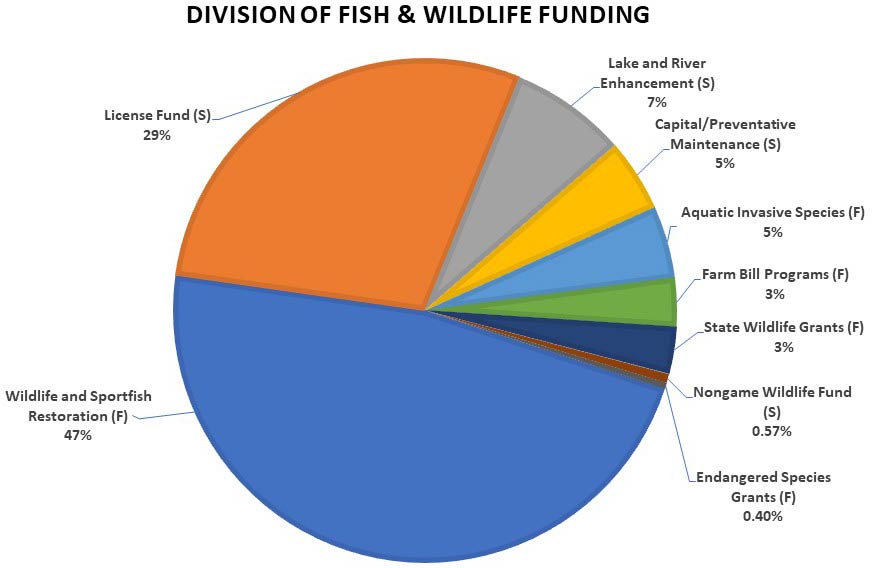
Every time you buy a new rifle, ammo, lures, or fill up your boat for a day on the water, you pay a little extra—generally around 10 percent—to fund fish and wildlife conservation. These excise taxes make up the Wildlife and Sportfish Restoration Program, and they have generated tens of billions of dollars for wildlife restoration projects since 1937. Duck Stamps are to national wildlife refuges as hunting and fishing licenses are to state fish and game budgets. Those hunting and fishing license sales make up the lion’s share of management budgets across the nation. In Idaho, $55 million of their $120 million fish and game budget comes from license revenue. In Indiana, the combination of license fees along with allocations from the Wildlife and Sportfish Restoration Program makes up 69 percent of the state’s fish and wildlife funding. Where would the money come from without hunters, shooters, and anglers? 

Who Would Find the Bodies? 

Hunters have a knack for stumbling upon the decomposing remains of fellow humans. In the fall of 2023, hunters found more than a few bodies in the Vermont woods, some of which had gunshot wounds in the head. According to the National Association of Missing and Unidentified Persons System, 600,000 people go missing in the U.S. each year. Sometimes, they go into the deer woods for a quiet spot to commit suicide. Other times, bodies are wrapped up in a tarp and dumped in the woods of South Carolina. If you do stumble across human remains, don’t touch anything. If you can, take a few photos of the area so law enforcement believes you. Mark the exact location, leave, and contact the authorities when you’re back in cell phone range. 

How Would PETA Make Money? 

Here’s PETA’s take on the necessity of hunting: “Hunting might have been necessary for human survival in prehistoric times, but today most hunters stalk and kill animals merely for the thrill of it, not out of necessity. This unnecessary, violent form of “entertainment” rips animal families apart and leaves countless animals orphaned or badly injured when hunters miss their targets.”

Talk about dramatic. Seriously, though, how would these groups feed themselves without a villain? Have you seen the cost of wheatgrass lately? In 2022, PETA received $66 million in contributions. They spent $14.3 million on executive compensation, salaries, and wages. You can’t raise that kind of money without something to rally against. To be fair, PETA doesn’t just rally against hunting. They’re also against humans eating animals of any kind, and they would prefer that we all turn into vegans.  Good luck with that.

Meat grinder

Food Insecurity 

One deer can feed up to 200 people. That’s some serious bang for your buck. Get it? Hunters donate nearly 10 million pounds of game meat annually, which provides approximately 40 million meal servings for hungry people. I certainly don’t see PETA lining up at the food bank with a Ford full of tofu. There is serious food security in wild game. Other research shows that American hunters annually share some 103 million pounds of harvested game meat with family, friends, or others outside their immediate households.

If no one hunted, where would that protein come from? I love flank steaks, but have you seen the cost of meat lately? Why buy the cow when you can get your venison for free? Well, it’s not free because we pay licenses and taxes to fund our fish and game departments (see above). 

If Americans ever stopped hunting, the list of things that would hit the proverbial fan would be vast. These five scenarios are just the tip of the iceberg. Our system of conservation may not be perfect, nor does it please everyone, but that’s hardly the point. For now, we’ve got hunters willing to take to the hills and keep the neighbors and family fed, deer populations down, agencies funded, and ani-hunters mad. That’s good enough for me. 

PJ DelHomme is a writer and editor living in western Montana. He runs Crazy Canyon Media and