Author Archives: crazycanyonjournal

Hunters and Tree-huggers

Can Hunters and Tree-huggers Be Friends? 

By PJ DelHomme 

Why yes, we absolutely can be friends, but it’s going to take work on the part of big bad hunters to get us holding hands and singing “We Are the World” around the campfire. 

I used to be adamantly opposed to hunting and even cutting down trees. I’m better now, though. I make my own meat, and I understand that toilet paper doesn’t come from Costco. 

I didn’t grow up hunting, and I think that gives me a perspective that many in the hunting community don’t have. I’ve lived in both worlds, and I understand why some people are adamantly opposed to hunting and resource extraction. Namely, they’ve never lived it. They’ve never been exposed to sustainable hunting. They’ve never cruised timber. And they never will. Perhaps I’m naive, but I still think most people respond to reason, which is why I write things like this. 

Why We Need to Get Along 

A 2023 survey showed that 77 percent of the U.S. population approves of legal hunting. Seventy-nine percent of those surveyed said they were fine with hunting “for conservation of healthy wildlife populations,” and 74 percent were cool with hunting for meat. That approval rating drops to 24 percent when a “trophy” is the main reason for hunting. Just 32 percent of respondents were okay with hunters seeking a challenge. 

Who cares what those non-hunters think, right? What do they know? Hunters don’t need their approval. That mentality is the best way to see hunting go away forever. All hunters should care what they think. More and more, those non-hunters, and even those opposed to hunting, are serving on state wildlife commissions and being hired to work in state game agencies. Like it or not, they are making the rules for hunting and fishing. So, yeah, their opinion matters. 

So, what can we do to help the non-hunting, even anti-hunting public, understand that hunting is absolutely necessary to wildlife management and an integral part of a hunter’s life and livelihood? It’s not that hunting is a major tool for conservation and land managers or that hunting is part of our heritage. They don’t care about that. Here are just a couple of ways we can help convince our friends that hunting isn’t all Elmer Fudd and Bambi. 

  1. Above All Else, Talk Food

Everyone needs to eat. The first step to winning over non-hunters is through their stomach. Forget about trying to reason with them, at least initially. Help them understand that your hamburger was never wrapped in cellophane. Celebrate your harvest. Invite them over for dinner, but don’t tell them what’s on the menu until they get there. Be sure they’re not vegetarian, though. Once they arrive, focus solely on how you prepared the game. Don’t talk about the shot. Don’t talk about the blood pouring out of its exit wound. Drop subtle hints about the pack out. Talk about the secret to aging wild game. What did you use for the marinade? If they ask questions, embrace each one. And above all else, make it taste good. Go with a recipe that you know is a winner. Don’t get cute and try out a new kidney recipe. Brush up on your deer meat facts. Talk about how venison is a lean, healthy source of protein. 

  1. Teach, Don’t Preach 

Let’s say that your dinner party was a success. Now your neighbor wants to come hunting with you. Jackpot! In the field, show them what you do. Point out things only hunters would notice. Note the tracks, the poop, the rubs. Get off the trail and be willing to answer any question they have. And if you don’t know the answer, just say you don’t know. It’s okay. Resist the urge to get on a high horse and talk about how hunters brought wildlife back from the brink of extinction. Don’t talk about how much you love elk, while at the same time you try to put an arrow through its ribcage. It’s a complex, antithetical argument that has to evolve over time. First-time hunters have enough to think about. 

  1. Image is Everything 

Hunters don’t do ourselves any favors when it comes to improving our image. All it takes is a few raving lunatics on social media to give us all a bad rap. From arguing online (FYI, no one wins) to posting gruesome kill shot videos, we can control our image. So what can we do? First, be an ambassador. When you represent hunters or hunting, take the high road at a public meeting, on a bar stool, or on social media. And don’t be afraid to form your own opinion on the issues. I don’t think all hunters have to support each other in every way. I respond honestly if a non-hunter asks me what I think about an issue. Second, always lend a hand. If someone isn’t hunting and they have a flat on an old logging road, offer to help. Small steps leave a big impact. 

  1. Protect Access 

When I hear the word access, I immediately think about access to land. Of course, we need access to places to hunt, and the word has finally gotten out that hunters need more room to roam. Just look at Wyoming’s corner-crossing saga, which is still making national headlines. At the same time, we need access to other things like mentors, shooting ranges, and wildlife commission meetings. It makes my head spin to think of all the ways access to hunting can be made more difficult by taking away things that we take for granted. It never hurts to show up at public meetings, non-profit fund-raising banquets, and fence pulls. 

Being patient and understanding with those who energetically and enthusiastically try to eliminate hunting is ridiculously difficult. Then again, the percentage of those who are unwavering in their ideological convictions against hunting is relatively low. Maybe I’m naive, but as a former anti-hunter, I know that reason might actually prevail. 

lifetime hunter

Confessions of a Tree-hugging Anti-hunter 

How an anti-hunter was converted to a lifetime hunter

By PJ DelHomme

Before making a career out of writing about hunting and conservation, I was adamantly opposed to the idea of hunting. In part one of this two-part series, I step into the confessional to explain why I never wanted to eat Bambi or cut down a tree. 

When I was a freshman in college in Mobile, Alabama, I remember my dad telling me in a rambling conversation that two duck hunters had gone missing in Mobile Bay. “Chalk two up for the ducks,” I said. It was a heartless comment that illustrated my flippant attitude toward human life and my feelings about hunting. 

After my freshman year, I moved to Montana for a summer to work. The West set its hook in me hard, and I promptly dropped out of school to figure out life away from humidity, gumbo, and sweet tea. I immersed myself in the world of natural resources. I worked on Forest Service crews with guys who hunted elk with a bow and arrow. I hiked through timber stands, marking trees for removal. I lived in a small town where people hung their deer and elk from a sturdy tree in the backyard when the weather was cool. All the while, I was just smart enough to keep my mind open and my mouth mostly shut. 

Hunting isn’t an afterthought in Montana. It’s ingrained in the culture. It’s just what people do to put meat in the freezer. I was intrigued 20 years ago, and I still am today. 

Back in Alabama, one had to belong to a hunting club to hunt. We had little to no public land where I grew up. In Montana, people just park the truck and start walking. My mind was, and continues to be, blown. I liked to hike, and I liked to eat meat. It made sense that I would try to make my own meat, but how? I started by learning from the inside out. 

One fall, I got a job working at a wild game processor in Bozeman. I slung all kinds of meat for 10 hours a day: elk, bison, pronghorn, deer, moose, and bear. One time, a guy brought in a llama and thought it was an elk, but that’s a story for another time. I spoke to the hunters, and most seemed like good people. They were tired but happy. Most had respect for the animals they brought us because the carcasses were fresh and clean.

After learning how to break down an animal into chops, steaks, and burger, I borrowed a .30-06 and took to the hills. It took me a few years and a mentor from my Forest Service days to figure out the hunting thing. It was an evolution that I could not have done on my own. There are real barriers to hunting and making new hunters. I was/am what they call an adult-onset hunter, and I overcame the bias I carried for hunting before I moved to the promised land. I’ve thought a lot about why I didn’t like hunting as a kid. I do not doubt that if I still lived in Alabama, I would be slapping a Sierra Club sticker on a Prius before chaining myself to a feller buncher somewhere in protest. Here are a few reasons that might help explain why I was an anti-hunter. 

  1. Non-hunting Family 

Hunting isn’t like baseba,ll where a few friends get together and play a game. You need a weapon. You need habitat. You need a mentor to show you what to do if you kill something. My dad showed me how to do things, but hunting was not one of them. Hunting simply was not part of who we were as a family. And that’s fine. I found hunting on my own, but I wasn’t exposed to it through an uncle or grandparent. As a result, I formed my own opinion on it because of societal labels, and that’s a problem. See #2. 

  1. Hunting’s Image 

I grew up on Looney Tunes, which included Elmer Fudd chasing that wascally wabbit. Even though I knew it was a cartoon, it validated my preconceived notions about hunters. I still remember seeing Bambi in theaters as a seven-year-old. You think that scarred me? Hell, yes, it did. But it wasn’t just when I was a child. 

When I was in my teens, hunting shows started going mainstream. I recall sitting at a friend’s house flipping channels, and we landed on an unsuspecting turkey strutting around. Cool, we thought, a nature show. There was a BOOM, and the turkey’s head exploded. Two camo-clad and face-painted hunters emerged from the bushes, high-fiving and yucking it up with a Southern drawl that put mine to shame. We looked at one another in horror. With few exceptions, hunting shows have not evolved. They still suck. 

  1. Access to Land 

As a high school kid, I desperately wanted to be outdoors. You can go outside in the South, but you better know how to play football. I remember driving to a state park in nowhere Mississippi just to find a place to hike, but we never found the trailhead. We went to New Orleans that day instead. My folks didn’t have the money or contacts to belong to a hunting club, which means you don’t hunt. Because I had limited access to public land, I had developed an unrealistic ideal that all land should be pristine, never hunted and never harvested. Just let nature take its course, I thought. Only after I moved to Montana did I learn first-hand that natural resources can be used wisely to last generations. 

In part two, I’ll examine how hunters can help tree-hugging anti-hunters understand that hunting is not evil. We can do a few things to tell the world that we’re not all Elmer Fudd wannabes. In fact, there is a whole lot that Americans (even hunters) don’t know about hunting and its contributions to the greater good. Stay tuned. 

Tag drawing system

Limited-entry Draw Tags: I Quit

PJ DelHomme – Okayest Media Contributor

I’ve played the tag lottery enough not to care anymore. In the last couple of years, I’ve been more excited to draw an extra doe tag than anything else. How can this be? What kind of hunter wouldn’t want to hunt for the biggest bucks, bulls, and rams? 

‘Twas the night before Montana’s limited-entry tag draw deadline, when all through the house, not a creature was stirring, except for me in the basement sitting in front of the computer. Before me on my screen, in all its glory, was 15 years’ worth of playing the points game—13 points for elk, 10 points for sheep, moose, and goat. 

I halfheartedly looked through the regs, thinking about where to apply. Then, I lost all interest and motivation. I closed the laptop and went to bed. I am what they call a quitter. And I’m okay with that. 

What are Draw Tags? 

Most states manage consumable wildlife like big game for residents and revenue. Tags and licenses generate money to keep the lights on and manage wildlife resources and their habitat.

Where I live in Montana, managers set aside some hunting units for opportunity, meaning I can hunt for a bull elk every year. In other units, the state offers a very limited number of tags for bulls, which means it’s a coveted trophy area. For those units, there is a high demand for a finite resource, which means not everyone gets a tag. In fact, the odds of drawing some units are less than one percent.

It’s not just Montana. States across the West (and a growing number in the East) have created various lotteries, preference point systems, bonus points, auction tags, landowner tags, and other ways to make hunters feel lucky. Some tags are sold to the highest bidder and come with special privileges. Other tags are truly the luck of the draw. 

A Booming Tag Industry 

The demand for any tag that’s not over-the-counter is so great that tag consultant companies have sprouted to help hunters navigate the morass of applications, dates, fees, and regulations. My friend Robert Hannenman is a tag consultant for Huntin’ Fool. He draws tough tags for himself and his family every season because that’s his job. To be fair, he’s also a city firefighter. Huntin’ Fool is certainly not the only tag service/consultant business out there. 

Thanks to these tag services, more hunters than ever are throwing their names into the draws across a dozen states. They’re playing the odds on a much greater scale than some schmuck like me who just kind of figured out how to play the tag game in his own state. I like to think of myself as a do-it-yourselfer, but Montana’s hunting regulations get more complicated every year. Unless you like spending money on disappointment, you really do need help from someone who knows what they’re doing.

What Happens If You Draw? 

Before throwing in the tag towel, I had mixed emotions about drawing a fancy tag, which, I admit, sounds dumb. I get only a handful of days to hunt each season, and they typically aren’t in a row. Life is wild right now with careers, kids, dog, chores—you name it. Hunting doesn’t pay the bills, but it occasionally fills the freezer. What would I do if I drew a Rocky Mountain bighorn tag for a hunt five hours away? 

I’ve heard horror stories from good friends who have drawn “slam dunk” tags, posted their good fortune on social media, and then felt the collective weight of their hunter friends, all wondering why they couldn’t fill that tag. Their first mistake was posting it online or telling anyone. Even if you told no one, there is still pressure to fill a once-in-a-lifetime tag with nothing short of a record-book animal. I just don’t need that in my life. 

Elk hunting draw tags

The Coup de Draw

Because I’m a quitter, I’d like to end this on a pity party. For more than a decade, I put in to hunt one unit where I used to live near Bozeman. It was a place I knew well, having seen plenty of elk there, yet only five tags are dolled out for this area each season. The odds of me drawing that tag in 2023 were around three percent with a dozen points. 

To be fair, some people do draw “impossible” tags, like hunting megacelebrity Steven Rinella. Earlier this year, I tuned into the latest MeatEater episode to watch Rinella, a fellow Montana resident, hunting the very unit of my dreams. Not only did he pull this miracle tag, but he filmed it, too. The episode has been viewed 1.7 million times in just six months. If I were a bigger person, I’d be happy for him. 

Quick disclaimer: I appreciate what Rinella has done for hunting. He and Randy Newberg are incredible ambassadors for hunting. But when I realized where Rinella was hunting, it felt like a straight kick to the gonads. 

 “A lot of people will say that this is the best elk hunting opportunity in the whole state,” Rinella says. “This is the first time ever in my life, in Montana, that I’ve ever drawn a limited-entry unit,” he goes on to say. “I’d say it’s a once-in-a-lifetime opportunity, but it’s probably like a once-in-two-lifetime opportunity.” 

Yeah, no shit. The odds of drawing that unit were already dismal. I can’t wait to see how many apply for it in 2025. I do know that there will be one less applicant. 

If there is one upside to this cathartic rant, it’s that my fellow hunters will have one less hunter’s hopes and dreams to compete with. Consider this my gift. I sincerely hope my fellow hunters decide not to bother applying for antlerless whitetail permits, for which I actually have a 1 in 3 chance of drawing. Those are odds I can live with. 

Deer in the city

What If No One Hunted? 

By PJ DelHomme 

There is a small but vocal segment of American society that would like nothing more than to see hunting go away. Let’s do it then. Let’s see what might happen if no one hunted in the U.S. 

Hunting is human. We’ve been killing and eating animals long before tofu and smoothies. As hunting has evolved over the eons, it seems only recently that some want to see hunting go away entirely. That’s a bad idea, not simply because I like hunting.

Long before our country even had a name, America evolved with hunting. Native Americans shaped the landscape to suit their hunting needs. Hunting is the basis of the North American Model of Conservation, which, among other things, pays for our bounty of wildlife and ensures wild animals remain on the landscape. Take hunting away, and we will get a whole heap of problems. Here are just a few. 

Deer Apocolypse 

Animal lovers tend to be pro-deer until the deer eat their prized flowers or fly through the windshield. Let’s pick on Iowa for a moment. Iowa has roughly 400,000 deer. “Unchecked, Iowa’s deer herd could grow at a rate of 20 percent to 40 percent each year. At this rate, deer numbers would double in as few as three years,” according to a report by Iowa DNR. The report also says that hunting is the only major source of mortality for the state’s deer population, killing about 25 percent of them each year. Considering that Iowa is already third in the nation for deer collisions, imagine what might happen when the population doubles every three years? Auto insurance is already expensive, and it would be a lot worse without hunters. 

Agencies Would Go Broke 

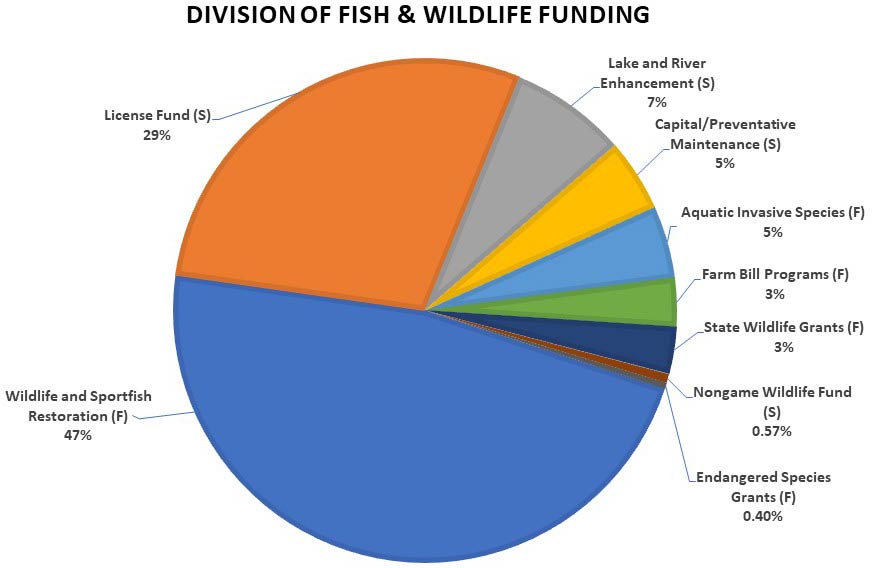
Hunters, shooters, and anglers pay for wildlife conservation in our country. We pay to play. You don’t need a license for so-called non-consumptive uses like birdwatching, backpacking, mountain biking, or camping. Those industries have fought hard for years to keep taxes off of their gear. Here’s the deal. 

Every time you buy a new rifle, ammo, lures, or fill up your boat for a day on the water, you pay a little extra—generally around 10 percent—to fund fish and wildlife conservation. These excise taxes make up the Wildlife and Sportfish Restoration Program, and they have generated tens of billions of dollars for wildlife restoration projects since 1937. Duck Stamps are to national wildlife refuges as hunting and fishing licenses are to state fish and game budgets. Those hunting and fishing license sales make up the lion’s share of management budgets across the nation. In Idaho, $55 million of their $120 million fish and game budget comes from license revenue. In Indiana, the combination of license fees along with allocations from the Wildlife and Sportfish Restoration Program makes up 69 percent of the state’s fish and wildlife funding. Where would the money come from without hunters, shooters, and anglers? 

Who Would Find the Bodies? 

Hunters have a knack for stumbling upon the decomposing remains of fellow humans. In the fall of 2023, hunters found more than a few bodies in the Vermont woods, some of which had gunshot wounds in the head. According to the National Association of Missing and Unidentified Persons System, 600,000 people go missing in the U.S. each year. Sometimes, they go into the deer woods for a quiet spot to commit suicide. Other times, bodies are wrapped up in a tarp and dumped in the woods of South Carolina. If you do stumble across human remains, don’t touch anything. If you can, take a few photos of the area so law enforcement believes you. Mark the exact location, leave, and contact the authorities when you’re back in cell phone range. 

How Would PETA Make Money? 

Here’s PETA’s take on the necessity of hunting: “Hunting might have been necessary for human survival in prehistoric times, but today most hunters stalk and kill animals merely for the thrill of it, not out of necessity. This unnecessary, violent form of “entertainment” rips animal families apart and leaves countless animals orphaned or badly injured when hunters miss their targets.”

Talk about dramatic. Seriously, though, how would these groups feed themselves without a villain? Have you seen the cost of wheatgrass lately? In 2022, PETA received $66 million in contributions. They spent $14.3 million on executive compensation, salaries, and wages. You can’t raise that kind of money without something to rally against. To be fair, PETA doesn’t just rally against hunting. They’re also against humans eating animals of any kind, and they would prefer that we all turn into vegans.  Good luck with that.

Meat grinder

Food Insecurity 

One deer can feed up to 200 people. That’s some serious bang for your buck. Get it? Hunters donate nearly 10 million pounds of game meat annually, which provides approximately 40 million meal servings for hungry people. I certainly don’t see PETA lining up at the food bank with a Ford full of tofu. There is serious food security in wild game. Other research shows that American hunters annually share some 103 million pounds of harvested game meat with family, friends, or others outside their immediate households.

If no one hunted, where would that protein come from? I love flank steaks, but have you seen the cost of meat lately? Why buy the cow when you can get your venison for free? Well, it’s not free because we pay licenses and taxes to fund our fish and game departments (see above). 

If Americans ever stopped hunting, the list of things that would hit the proverbial fan would be vast. These five scenarios are just the tip of the iceberg. Our system of conservation may not be perfect, nor does it please everyone, but that’s hardly the point. For now, we’ve got hunters willing to take to the hills and keep the neighbors and family fed, deer populations down, agencies funded, and ani-hunters mad. That’s good enough for me. 

PJ DelHomme is a writer and editor living in western Montana. He runs Crazy Canyon Media and