Let’s talk turkey—specifically, turkey chokes. You know, those nifty little devices that might just be the unsung heroes of your turkey hunting saga or yet another gadget gathering dust in your gear pile. Let’s dive into why these tools could make or break your next hunt, drawing from the Okayest Hunter’s latest podcast.
What’s the Big Deal with Turkey Chokes?
A turkey choke is like the sniper scope of the shotgun world. It tightens up your shot’s spread, making sure that more pellets hit your target. Essential? Well, that depends on whether you like telling stories about the turkey that got away or showing pictures of the one that didn’t. During the podcast, Co-host, Greg Tubbs got down to brass tacks and why the Carlson XD choke might just be the MVP when paired with Winchester XR ammo for those 50-yard face-offs.
Do You Really Need a Turkey Choke?
Over at Okayest Hunter (check out an oldie but a goodie blog post), they’re stirring the pot with a provocative question: Do you really need a turkey choke? If your shooting style is more “spray and pray” than “aim and slay,” maybe not. But for those of us who prefer our dinosaurs… er’ turkeys in the crock pot rather than gobbling in the underbrush as they escape, a good choke might make all the difference.
Gear Talk: Straight from the Field
The podcast wasn’t just tech specs and theoreticals. They also got to hear from other hunters who’ve seen what works (and what doesn’t) when you’re staring down a beady-eyed gobbler. One of the podcast listeners who commented on the live podcast stream swore by his Carlson XD choke’s pattern tightness at distances that would make lesser chokes weep.
Tactical Tips for Choke Newbies
Choosing the right choke isn’t just about picking the shiniest option in your local Scheels. It’s about matching your gear to your game. Think about the terrain and the typical turkey antics in your hunting area. Are those turkeys more likely to tiptoe into close range, or are they the skittish types that hang back in the next zip code? Your choke strategy should adapt accordingly.
Wrapping It Up
Whether you’re an Okayest Hunter or a seasoned pro, understanding the secret language of turkey chokes could elevate your game from hit-or-miss to hit-after-hit. By blending seasoned advice with a dash of gear know-how, you can fine-tune your setup for success. So here’s to more turkey nuggets at the dinner table with your fam!
There you have it. Turkey chokes might just be your next best friend in the field—unless you prefer telling stories about “the one that got away.” Choose wisely, hunt ethically, and may your aim be true!
There is a small but vocal segment of American society that would like nothing more than to see hunting go away. Let’s do it then. Let’s see what might happen if no one hunted in the U.S.
Hunting is human. We’ve been killing and eating animals long before tofu and smoothies. As hunting has evolved over the eons, it seems only recently that some want to see hunting go away entirely. That’s a bad idea, not simply because I like hunting.
Long before our country even had a name, America evolved with hunting. Native Americans shaped the landscape to suit their hunting needs. Hunting is the basis of the North American Model of Conservation, which, among other things, pays for our bounty of wildlife and ensures wild animals remain on the landscape. Take hunting away, and we will get a whole heap of problems. Here are just a few.
Deer Apocolypse
Animal lovers tend to be pro-deer until the deer eat their prized flowers or fly through the windshield. Let’s pick on Iowa for a moment. Iowa has roughly 400,000 deer. “Unchecked, Iowa’s deer herd could grow at a rate of 20 percent to 40 percent each year. At this rate, deer numbers would double in as few as three years,” according to a report by Iowa DNR. The report also says that hunting is the only major source of mortality for the state’s deer population, killing about 25 percent of them each year. Considering that Iowa is already third in the nation for deer collisions, imagine what might happen when the population doubles every three years? Auto insurance is already expensive, and it would be a lot worse without hunters.
Agencies Would Go Broke
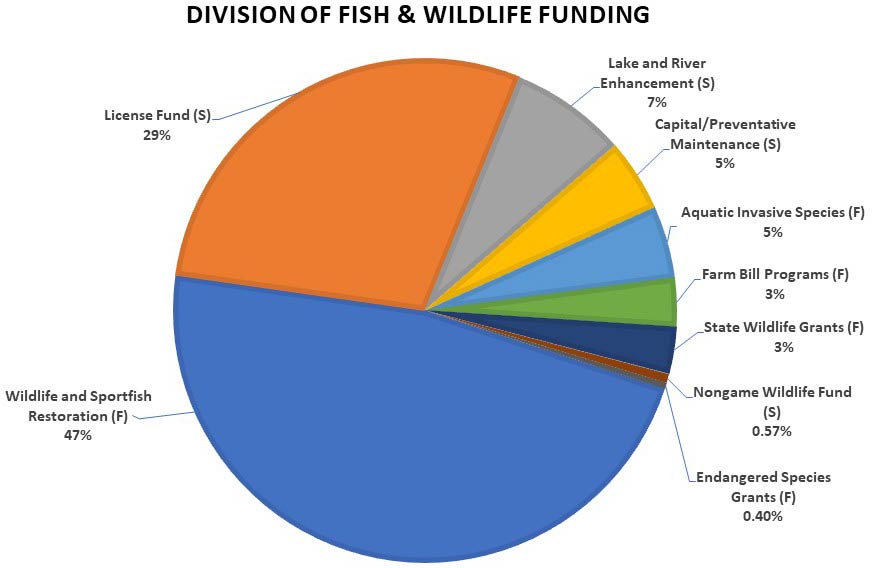
Hunters, shooters, and anglers pay for wildlife conservation in our country. We pay to play. You don’t need a license for so-called non-consumptive uses like birdwatching, backpacking, mountain biking, or camping. Those industries have fought hard for years to keep taxes off of their gear. Here’s the deal.
Every time you buy a new rifle, ammo, lures, or fill up your boat for a day on the water, you pay a little extra—generally around 10 percent—to fund fish and wildlife conservation. These excise taxes make up the Wildlife and Sportfish Restoration Program, and they have generated tens of billions of dollars for wildlife restoration projects since 1937. Duck Stamps are to national wildlife refuges as hunting and fishing licenses are to state fish and game budgets. Those hunting and fishing license sales make up the lion’s share of management budgets across the nation. In Idaho, $55 million of their $120 million fish and game budget comes from license revenue. In Indiana, the combination of license fees along with allocations from the Wildlife and Sportfish Restoration Program makes up 69 percent of the state’s fish and wildlife funding. Where would the money come from without hunters, shooters, and anglers?
Who Would Find the Bodies?
Hunters have a knack for stumbling upon the decomposing remains of fellow humans. In the fall of 2023, hunters found more than a few bodies in the Vermont woods, some of which had gunshot wounds in the head. According to the National Association of Missing and Unidentified Persons System, 600,000 people go missing in the U.S. each year. Sometimes, they go into the deer woods for a quiet spot to commit suicide. Other times, bodies are wrapped up in a tarp and dumped in the woods of South Carolina. If you do stumble across human remains, don’t touch anything. If you can, take a few photos of the area so law enforcement believes you. Mark the exact location, leave, and contact the authorities when you’re back in cell phone range.
How Would PETA Make Money?
Here’s PETA’s take on the necessity of hunting: “Hunting might have been necessary for human survival in prehistoric times, but today most hunters stalk and kill animals merely for the thrill of it, not out of necessity. This unnecessary, violent form of “entertainment” rips animal families apart and leaves countless animals orphaned or badly injured when hunters miss their targets.”
Talk about dramatic. Seriously, though, how would these groups feed themselves without a villain? Have you seen the cost of wheatgrass lately? In 2022, PETA received $66 million in contributions. They spent $14.3 million on executive compensation, salaries, and wages. You can’t raise that kind of money without something to rally against. To be fair, PETA doesn’t just rally against hunting. They’re also against humans eating animals of any kind, and they would prefer that we all turn into vegans. Good luck with that.
One deer can feed up to 200 people. That’s some serious bang for your buck. Get it? Hunters donate nearly 10 million pounds of game meat annually, which provides approximately 40 million meal servings for hungry people. I certainly don’t see PETA lining up at the food bank with a Ford full of tofu. There is serious food security in wild game. Other research shows that American hunters annually share some 103 million pounds of harvested game meat with family, friends, or others outside their immediate households.
If no one hunted, where would that protein come from? I love flank steaks, but have you seen the cost of meat lately? Why buy the cow when you can get your venison for free? Well, it’s not free because we pay licenses and taxes to fund our fish and game departments (see above).
If Americans ever stopped hunting, the list of things that would hit the proverbial fan would be vast. These five scenarios are just the tip of the iceberg. Our system of conservation may not be perfect, nor does it please everyone, but that’s hardly the point. For now, we’ve got hunters willing to take to the hills and keep the neighbors and family fed, deer populations down, agencies funded, and ani-hunters mad. That’s good enough for me.
Embark on an enthralling voyage through time, tracing the lineage of turkeys from their colossal dinosaur ancestors to their current status as a coveted game bird. As we unravel the story of these fascinating creatures, let’s not forget the ethos of the hunt, embodied in the mantra of our brand, Okayest Hunter: “Your tag. Your hunt.” This phrase isn’t just a motto; it’s a celebration of the hunting experience, from the highs of a successful harvest to the learning moments of eating tag soup.
Turkeys and Their Dinosaur Ancestors
The saga begins in the Mesozoic Era, dominated by the reign of dinosaurs. Among these ancient giants, a group of feathered dinosaurs known as theropods roamed the earth. These creatures are the direct ancestors of all modern birds, including turkeys, linking your backyard bird to the formidable T-Rex. This connection highlights the remarkable journey of evolution, showing how turkeys have adapted and survived through millions of years, from the age of dinosaurs to the present day.
The Origin of Turkeys: An Ancient Tale
Advancing about 10 million years ago, modern turkeys’ ancestors debuted in North America. These early birds have since evolved into the turkeys we recognize today, overcoming environmental changes and predators to thrive across the continent. The misnomer “turkey” itself is a nod to historic trade routes and mix-ups, but make no mistake, these birds are as American as the landscapes they roam.
The Art of Turkey Hunting
The tradition of turkey hunting is rich in history, dating back to the indigenous peoples of North America. These skilled hunters were the first to practice calling and stalking turkeys, using every part of the bird in a true spirit of respect for nature. This deep-rooted respect for the hunt is what “Your Tag. Your Hunt.” is all about, reminding us that hunting is not just about the harvest but the experience and connection to the history of the natural world.
Despite facing challenges from overhunting and habitat loss, conservation efforts in the 20th century have led to a resurgence in wild turkey populations. Today, turkey hunting is celebrated as a vital tradition, bringing together enthusiasts and Okayest hunters alike to share the thrill of the chase and the beauty these birds exemplify in their feathers and fans.
Celebrating the Hunt: A Culinary Finale
After a day spent in the wilderness, there’s no better way to celebrate the hunt than with a delicious meal from your harvest. Who doesn’t want to feast on a dinosaur!? Here’s a simple yet delightful recipe for White Chili with Wild Turkey, a perfect dish to reflect on the day’s adventure.
White Chili with Wild Turkey
Ingredients:
1 lb wild turkey breast, diced
1 tablespoon olive oil
1 large onion, chopped
2 garlic cloves, minced
2 cans (15 oz each) white beans, drained and rinsed
1 can (4 oz) green chilies, chopped
1 teaspoon ground cumin
1 teaspoon dried oregano
1/2 teaspoon chili powder
4 cups chicken broth
Salt and pepper to taste
Fresh cilantro, chopped (for garnish)
Shredded cheese (optional, for garnish)
Instructions:
In a large pot, heat the olive oil over medium heat. Add the turkey and cook until browned.
Add the onion and garlic, cooking until the onion is translucent.
Stir in the beans, green chilies, cumin, oregano, and chili powder.
Pour in the chicken broth and bring to a boil. Then, reduce the heat and simmer for 30-45 minutes.
Season with salt and pepper to taste.
Garnish with fresh cilantro and shredded cheese before serving.
This White Chili with Wild Turkey recipe is more than a meal; it’s a tribute to the hunt, the harvest, and the simple joys of preparing and sharing wild game. It encapsulates the spirit of “your tag. Your hunt.,” celebrating every aspect of the hunting journey, from the pursuit in the wild to the culinary creations in the kitchen.
A Story of Survival and Tradition
The tale of the turkey, from its prehistoric beginnings to its place in modern hunting and wild game cuisine, is a testament to nature’s resilience and the wild’s enduring appeal. These birds have navigated the challenges of evolution, habitat changes, and human interaction to remain a symbol of the wilderness and a favorite among hunters throughout the US.
As you prepare to embark on your next turkey hunt or sit down to enjoy your wild turkey meal, remember the incredible journey these birds have undertaken. Celebrate the tradition, the hunt, and the meal, all woven together in the rich tapestry of our shared natural heritage.