Category Archives: Whitetail

Deer hunting cell cams

The Great Trail Camera Debate

Why Some Say They Give Hunters an Unfair Advantage 

Let’s say a hunter has a network of cellular trail cameras placed in the woods where she can monitor the activities of wildlife, such as whitetail deer, passing by. She chooses the locations of these trail cameras based on what she knows about whitetail deer patterns and preferences to optimize the amount of images she will capture. Her cameras pick up regular deer patterns, and she notices a nice shooter buck passing by the same hardwood-lined runway around dusk every few days. She plans to hunt that area on her day off, which she does, and she harvests that target buck. Is this unethical? Is this fair chase? Would it have mattered if her trail camera wasn’t a cellular kind, which sends information remotely, but rather the kind that needs to be manually checked with a card reader?

Hunting can be challenging, and many hunters prefer that. Some might argue that hunting is inherently  challenging, with or without modern tools. Others might argue still that it is irrelevant just how challenging the process of hunting is, because it’s about self-sufficiency and procuring wild food, and not about the logistics or thrill of the hunt. 

Do cellular trail camera give hunters an unfair advantage in this process? Some hunters think they do, while some do not. 

Many states have regulations governing the use of cellular trail cameras. In Alaska, there is a limit on the amount of information hunters are permitted to receive via trail cameras during active hunting seasons. In New Hampshire, the law prohibits hunters from killing an animal on the same day it showed up on a trail camera. Kansas, for example, has banned the use of the devices on all public lands. Some states, such as Arizona, have outright banned the use of any trail camera devices.

What do trail cameras do?

Trail cameras are electronic devices that are placed afield to observe what is happening in an area with minimal disturbance to wildlife. Sensors alert the camera to take photos whenever it detects an animal passing by (or sometimes a wayward tree branch or high gust of wind). Cellular trail cameras are equipped to be connected to a cell phone and transmit images and/or video remotely. Non-cellular trail cameras require the user to physically travel to the camera to manually check the images, which are saved on an SD card for later viewing.  

Do Trail Cameras Violate the Rules of Fair Chase? 

Trail cameras give hunters the ability to see an animal in a dated and time-stamped image before they see it in person. That is what they are designed to do. Some hunters argue that this violates the rules of fair chase because they believe all hunters should have an equal opportunity to shoot the game without interference from technology. 

Let’s take a look at the rules of fair chase, as defined by Pope and Young. The term fair chase refers to the ethical, sportsmanlike, and lawful pursuit of free-ranging wild game animals that does not give the hunter an improper or unfair advantage over the animal.

That means, according to Pope and Young, that no animals shall be taken under the following conditions: helpless in a trap, deep snow or water, or on ice; from any power vehicle or power boat; by jacklighting or shining a light at night; by the use of tranquilizers or poisons; while inside any escape-proof fenced enclosures; by the use of electronic devices for attracting, locating or pursuing game or guiding the hunter to such game, or by the use of a bow or arrow to which any electronic device is attached, with the exception of lighted nocks and recording devices that cast no light towards the target and do not aid in rangefinding, sighting, or shooting the bow. 

Most of these rules are straightforward, black or white, and without any wiggle room. But when it comes to trail camera use, it appeared to hunters that there was some gray area. 

The question of whether trail cameras violate these rules came up so often that the two main authorities in deer hunting, Pope and Young and Boone and Crockett, came together to release a joint statement on the matter. The statement read:

“The use of any technology that delivers real-time location data (including photos) to target or guide a hunter to any species or animal in a manner that elicits an immediate (real-time) response by the hunter is not permitted.”

The key component here is if the advantage of cellular trail cameras has an immediate effect on what action the hunter takes, and if that leads to a kill. So, for example, if a hunter receives an image on her phone from her cellular trail camera of a deer making its way toward a specific food plot, and she drops what she’s doing to immediately get to the food plot at the same time as the deer and proceeds to harvest that deer, that’s a real-time response. 

More recently, Boone and Crockett dug even deeper to clarify its stance. 

“Trail cameras can be a helpful tool in game management and selective hunting,” a statement read. “The use of any technology that delivers real-time location data (including photos) to target or guide a hunter to any animal in a manner that elicits an immediate (real-time) response by the hunter is not permitted. ‘Real time’ is the key concept. Seeing a photo and harvesting an animal a few hours later, or even the same day, uses this technology to assure a kill. It also takes advantage of the animal, which cannot detect impending danger from a camera. Waiting several days, or even until the following season, to pursue an animal captured on camera is different, and would not be deemed an unethical use of a trail camera.”

So to be clear, the use of trail cameras, even cellular trail cameras, in this definition, is not prohibited or deemed unethical. It’s that real-time response that is. 

“Technically, the reason we revisited the rule was because, as written, if you’ve followed a buck for four years on camera and the first pic of him years ago was on a cell cam, that buck was disqualified. We didn’t want that,” Justin Spring, formally of Boone and Crockett but current director of Pope and Young, said. “We just want hunters to think about the questions of fair chase. Is the use of this technology ensuring a harvest? Not giving an animal time to escape? We make hunters read and sign the (fair chase) affidavit, but at the end of the day, it comes down to the honesty of the hunter.”

Boone and Crockett’s in-depth statement covered more than just the use of trail cameras. It also touched on other advantages, as they defined them, such as drones, thermal night scopes, baiting, scent-attractants, and two-way radios or texting another hunter, and smart riflescopes. 

Our Hot Take on the Trail Camera Debate

Hunting regulations differ from region to region and from state to state, as do hunting styles and techniques. As time has passed, hunting has evolved with it. Modern technology has changed a lot about how we hunt, and of that there is no doubt. In many ways, it has given hunters an edge that wasn’t available a generation ago. 

These advancements inevitably bring up questions. It is healthy to explore different perspectives on modern advantages, such as trail cameras. There is no harm in respectful, thoughtful debate. 

This author believes there is nothing wrong with using trail cameras within legal limits. Like anything, trail cameras are another tool in the hunting arsenal. They offer insight into wildlife in a way that is noninvasive and doesn’t interrupt their normal routine. Use them as they are intended to be used, follow the law, and enjoy the experience. 

Deer Hunters on the decline

Wisconsin Deer Hunter Numbers On The Decline

A sobering picture is emerging of deer hunting in Wisconsin. Between 2005 and 2022, Wisconsin lost about 65,000 hunters. That’s a lot of folks hanging up their camo, and it’s not just the baby boomers – it’s across the board. The Hunter Demographics Project’s Phase 1 report, led by Dan Storm, one of the Wisconsin DNRs Deer Research Scientists, analyzed license sales from 2005 – 2022. The study broke down hunter participation rates by age and gender over time. That data was combined with success rates (among other data) to reveal the findings, and forecast what the implications are for the future of deer hunting in Wisconsin.

Wisconsin deer hunters on the decline

The Findings

Between 2005 and 2022, Wisconsin lost 65,000 hunters. On average, that is approximately 3,600 hunters lost per year. However, from 2014 – 2022, Wisconsin lost approximately 51,000 hunters, or about 6,300 hunters per year. Looking at the acceleration of the decline is scary. During this time period, Wisconsin put policies in place to increase hunter numbers – from allowing crossbows to legalizing blaze pink – and it has not had any effect on hunter decline.

Deer hunter numbers decline

When breaking down the numbers further, the study highlights the decrease in participation across all age ranges. For example, hunter participation for boys fell from approximately 27% in 2005 to about 15% in 2022. 40 year old males had a 30% participation rate in 2005 that fell to 20% in 2022. 50 year old males had a 28% participation rate in 2005, and that number fell to 21% in 2022. While baby boomers are aging out of hunting, the numbers illustrate that hunter decline is taking place across all generations.

The Reasons

What is causing the decline in Wisconsin deer hunters? That’s the first question that came to my mind as I saw the numbers in the study. I first thought of baby boomers before seeing details of the study. Unfortunately, there likely isn’t one specific item as the causes are multifaceted. Hypothetically, some of the issues can be attributed to access limitations, additional entertainment options, and a shift in hunting culture. Some of the limitations include a greater difficulty getting access to private land and increased public land competition. Both of these items put more strain on hunters trying to find quality hunting opportunities and to fill their tag.

Additionally, society has changed since 2005. There are more competing priorities, and more entertainment options than there were 20 – 30 years ago. Travel sports have exploded in popularity. The global youth sports market was valued at $37.5B in 2022 and is forecasted to grow to $69.4B by 2030. Smart phones have enabled an “instant feedback” society. Sitting in the woods waiting for deer to show up is the opposite of instant feedback. When we look at the decline in hunter participation for boys and middle aged males, for example, there’s a likely a correlation between the two as middle aged fathers aren’t hunting as much. As a result, boys are not being taken hunting at the same rate they were 20 years ago. That results in less young hunters being introduced to the sport and a greater decline in hunter participation numbers.

hunter participation rates

How much has social media and the shift in hunting culture influenced the decline? We’ve shifted from a society that celebrated harvesting deer to celebrating harvesting big deer. Over the last 20 years in Wisconsin, deer habitat has changed population centers and deer densities across the state. Has that limited the availability of quality hunting opportunities for certain hunters? If there are fewer quality hunting opportunities to harvest big deer, theoretically, hunters could be more likely to hang up their camo.

As we look toward the future, Storm and his team – Christine Anhalt-Depies, Adam Mohr, Meghan Henry, and Beth Wojcik – are looking to take the study further to look at the findings on a finer geographic scale. Their goal is to see if the decline is more pronounced in certain geographic areas, and to examine the per capita harvest. They are looking to better understand the mechanisms of hunter decline and per capita harvest. The more we can understand the finer points of hunter decline, the better chance we, as a hunting community, can work to combat them.

What does this mean?

While we celebrate the tradition of hunting, individual hunter goals vary; yet, the goal of any state hunting program is to manage a population. In this case, the Wisconsin DNRs job is to manage the deer population via hunter harvest. While deer densities differ across the state, including areas in Northern Wisconsin that have low deer densities, there are a number of areas where there’s an overabundance of deer. According to Storm, our ability to manage the deer herd is already on shake ground with current hunter numbers.

Meateater Cookbook

The historical harvest levels of deer in Wisconsin is approximately 350,000. In 2022, the antlerless deer harvested per hunter was .31. If hunter numbers continue their current pace of decline, there would need to be a substantial increase in the number of anterless deer harvested to keep pace with historical harvest levels, and to manage the population accordingly. If hunters can’t manage the deer population across the state, who steps in?

Stepping back further, less hunters means less revenue to manage natural resources. It also means less political power and a potential loss of control of deer management. As hunters, this potential issue could have massive long term ripple effects on our hunting rights. Unfortunately, the decline in hunter numbers is not localized to Wisconsin either. As noted in the study, Pennsylvania and Virginia have also seen declines in hunter participation.

What can we do as a hunting community?

Right now, we do not have a scalable solution to combat the current pace of hunter decline, and as a community, we are constantly under attack from anti-hunters. What we do to combat the anti-hunting message and influence the general public is important. One idea to influence the general public is to demonstrate the value of hunting to society. We talk about conservation, and we know the amount of conservation dollars funded by hunters via the Pittman-Robertson Act; yet, we need to show and demonstrate that hunting is conservation by achieving management goals, protecting rare plant species, and demonstrating the effects of better land management.

Another great idea is venison diplomacy. One of the many traditions I was taught as a young hunter was sharing in the harvest. While we often share venison with our fellow hunters, what if we shared it with our non-hunting neighbors and friends? There’s an old saying that goes “the way to a man’s heart is through his stomach.” I have met very few people who dislike a quality venison stick or venison brat. It’s a small gesture, but one that can go a long ways.

Are those the only answers to improving the perception of hunting? Absolutely not. There are others and we’ll continue to address this issue as a hunting community. Do we have scalable answers to the decline hunter participation? Nope. The only thing we can control is our actions, our decisions to participate, the way we treat other hunters, and the way we treat non-hunters. As the stoic Zeno said, “Well-being is realized by small steps.” If we all take small steps together as a community, we can make a difference.

Deer in the city

What If No One Hunted? 

By PJ DelHomme 

There is a small but vocal segment of American society that would like nothing more than to see hunting go away. Let’s do it then. Let’s see what might happen if no one hunted in the U.S. 

Hunting is human. We’ve been killing and eating animals long before tofu and smoothies. As hunting has evolved over the eons, it seems only recently that some want to see hunting go away entirely. That’s a bad idea, not simply because I like hunting.

Long before our country even had a name, America evolved with hunting. Native Americans shaped the landscape to suit their hunting needs. Hunting is the basis of the North American Model of Conservation, which, among other things, pays for our bounty of wildlife and ensures wild animals remain on the landscape. Take hunting away, and we will get a whole heap of problems. Here are just a few. 

Deer Apocolypse 

Animal lovers tend to be pro-deer until the deer eat their prized flowers or fly through the windshield. Let’s pick on Iowa for a moment. Iowa has roughly 400,000 deer. “Unchecked, Iowa’s deer herd could grow at a rate of 20 percent to 40 percent each year. At this rate, deer numbers would double in as few as three years,” according to a report by Iowa DNR. The report also says that hunting is the only major source of mortality for the state’s deer population, killing about 25 percent of them each year. Considering that Iowa is already third in the nation for deer collisions, imagine what might happen when the population doubles every three years? Auto insurance is already expensive, and it would be a lot worse without hunters. 

Agencies Would Go Broke 

Hunters, shooters, and anglers pay for wildlife conservation in our country. We pay to play. You don’t need a license for so-called non-consumptive uses like birdwatching, backpacking, mountain biking, or camping. Those industries have fought hard for years to keep taxes off of their gear. Here’s the deal. 

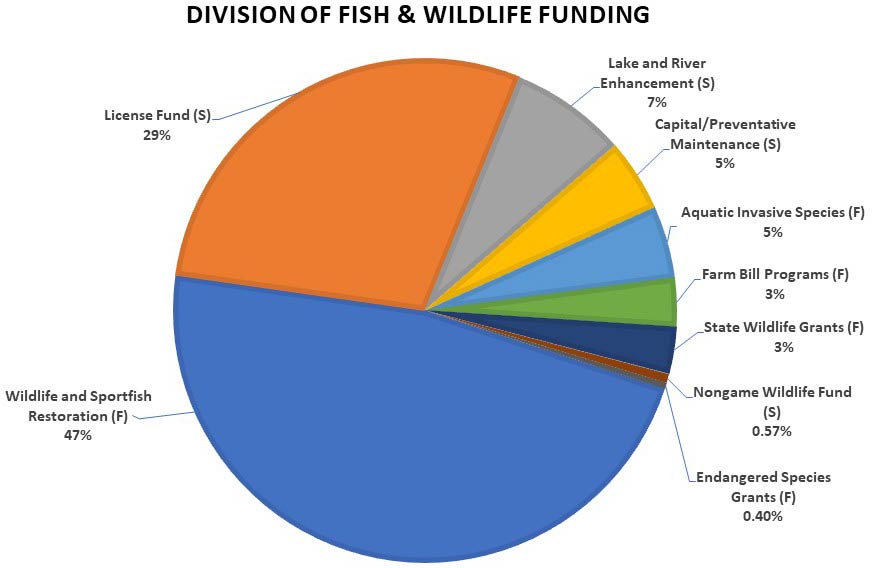
Every time you buy a new rifle, ammo, lures, or fill up your boat for a day on the water, you pay a little extra—generally around 10 percent—to fund fish and wildlife conservation. These excise taxes make up the Wildlife and Sportfish Restoration Program, and they have generated tens of billions of dollars for wildlife restoration projects since 1937. Duck Stamps are to national wildlife refuges as hunting and fishing licenses are to state fish and game budgets. Those hunting and fishing license sales make up the lion’s share of management budgets across the nation. In Idaho, $55 million of their $120 million fish and game budget comes from license revenue. In Indiana, the combination of license fees along with allocations from the Wildlife and Sportfish Restoration Program makes up 69 percent of the state’s fish and wildlife funding. Where would the money come from without hunters, shooters, and anglers? 

Who Would Find the Bodies? 

Hunters have a knack for stumbling upon the decomposing remains of fellow humans. In the fall of 2023, hunters found more than a few bodies in the Vermont woods, some of which had gunshot wounds in the head. According to the National Association of Missing and Unidentified Persons System, 600,000 people go missing in the U.S. each year. Sometimes, they go into the deer woods for a quiet spot to commit suicide. Other times, bodies are wrapped up in a tarp and dumped in the woods of South Carolina. If you do stumble across human remains, don’t touch anything. If you can, take a few photos of the area so law enforcement believes you. Mark the exact location, leave, and contact the authorities when you’re back in cell phone range. 

How Would PETA Make Money? 

Here’s PETA’s take on the necessity of hunting: “Hunting might have been necessary for human survival in prehistoric times, but today most hunters stalk and kill animals merely for the thrill of it, not out of necessity. This unnecessary, violent form of “entertainment” rips animal families apart and leaves countless animals orphaned or badly injured when hunters miss their targets.”

Talk about dramatic. Seriously, though, how would these groups feed themselves without a villain? Have you seen the cost of wheatgrass lately? In 2022, PETA received $66 million in contributions. They spent $14.3 million on executive compensation, salaries, and wages. You can’t raise that kind of money without something to rally against. To be fair, PETA doesn’t just rally against hunting. They’re also against humans eating animals of any kind, and they would prefer that we all turn into vegans.  Good luck with that.

Meat grinder

Food Insecurity 

One deer can feed up to 200 people. That’s some serious bang for your buck. Get it? Hunters donate nearly 10 million pounds of game meat annually, which provides approximately 40 million meal servings for hungry people. I certainly don’t see PETA lining up at the food bank with a Ford full of tofu. There is serious food security in wild game. Other research shows that American hunters annually share some 103 million pounds of harvested game meat with family, friends, or others outside their immediate households.

If no one hunted, where would that protein come from? I love flank steaks, but have you seen the cost of meat lately? Why buy the cow when you can get your venison for free? Well, it’s not free because we pay licenses and taxes to fund our fish and game departments (see above). 

If Americans ever stopped hunting, the list of things that would hit the proverbial fan would be vast. These five scenarios are just the tip of the iceberg. Our system of conservation may not be perfect, nor does it please everyone, but that’s hardly the point. For now, we’ve got hunters willing to take to the hills and keep the neighbors and family fed, deer populations down, agencies funded, and ani-hunters mad. That’s good enough for me. 

PJ DelHomme is a writer and editor living in western Montana. He runs Crazy Canyon Media and

Jared Scheffler a modern day Fred Bear

Jared Scheffler: The Fred Bear of the Modern Hunting World 

Exploring Jared Scheffler’s Revolutionary Approach to Hunting in Today’s Hunting Era

I’ve been watching the Whitetail Adrenaline DVDs since they first came out, and I might have been one of their number-one fanboys. Years ago, I used to show customers scenes uploaded to YouTube at a computer retailer where I worked. When I started podcasting in 2013, Jared Scheffler was my first podcast guest, and I was nervous about interviewing him. Of course, he was just as humble back then, and it was an “okay” first episode. 

Fast forward 10+ years when Jared Scheffler, the mastermind behind Whitetail Adrenaline, recently hopped on the Okayest Hunter podcast; it wasn’t just another episode but one that should leave you feeling inspired and motivated to be a deer hunter. It was a deep dive into the essence of hunting with a man I believe to be the Fred Bear of our time. Scheffler is a beacon of raw, unadulterated hunting adventures in an industry teeming with scripted hunts and predictable narratives, much like Bear was in his time.

A Legacy in the Making

With Scheffler’s vision, Whitetail Adrenaline has shattered the mold of traditional hunting content. By embracing the unpredictable chaos of unscripted, public land hunts, Scheffler has carved a niche that resonates deeply with the hunting community. His narrative isn’t just about hunting; it’s about the adventure, the unpredictability, and the sheer joy of the pursuit—echoing Fred Bear’s legendary spirit in a digital age. Of course, when things are unscripted, sometimes, s*** happens. Some of the blunders Whitetail Adrenaline documents are not only highly relatable, but they’re also gut-busting hilarious. 

Scheffler said on the Okayest Hunter podcast,

“I liked the idea of the customer paying for it. I remember it being very important to me in the beginning. I felt that held me to a standard that I had to produce something that was worthwhile that people were going to pay for and were willing to pay for. So that kept me in check to produce a better quality product.”

This quote reflects Scheffler’s commitment to quality and authenticity. He ensures his content genuinely resonates with his audience and values their support and investment in his work. When you watch the DVDs, this is extremely evident.

Mastering the Craft Against All Odds

Scheffler shared his epic saga of battling the digital wilderness, from YouTube’s capricious monetization policies to the turbulent world of sponsorships. Opting for DVDs in a streaming-centric world, Scheffler’s Whitetail Adrenaline thrives by setting its own rules, much like Bear did by pioneering bow hunting when it was considered obsolete. When Jared was getting his start, he drove to local hunting retailers to sell his DVDs on their shelves. Scheels was one of his first retailers. This was a big feat, considering DVDs were on their way out then, and even the big-name hunters weren’t selling in retail as they transitioned to connected TV. You gotta admire the grind and hustle of someone like Scheffler pursuing what he loved. That same grind, hustle, and unwavering work ethic is also imbued throughout the Hunts Whitetail Adrenaline documents. 

The Art and Philosophy of Hunting

Scheffler isn’t just about the how-tos; he’s about the whys. His insights into hunting strategies, from open terrain to dense timber, are not just tactics but philosophies. He teaches us that to understand hunting truly, one must embrace failures, adapt, and continually refine one’s approach. In a world filled with how-to content in hunting podcasts and YouTube channels, it’s an entirely different angle to learn from Scheffler simply by watching him in his element out in the whitetail woods. It reminds me of the adage, “Do as I do, not as I say.” <– I might have inverted this saying, hmm? You get the idea. Learning through osmosis is a powerful addition to all the how-to content we consume as whitetail hunters thirsty for knowledge to improve our craft season over season. 

More Than Just a Hunter

The impact of Whitetail Adrenaline extends beyond thrilling hunts; it’s about building a community that values authenticity and relatability. Scheffler’s willingness to showcase the unfiltered realities of hunting—successes, blunders, and all—has fostered a culture of genuine connection and learning among his audience. This authenticity positions Scheffler as a modern-day Fred Bear. Scheffler said in the most recent Uncuffed season, “I’ll shoot a smaller buck if I’m excited about the hunt.” This is a hell of a message to the hunting community in a day and age where monster bucks continue to be the prize hunters are after. Sometimes, as we promote at Okayest Hunter, the thrill of the hunt is worth pursuing. 

The Journey Continues

As the conversation drew to a close, it was evident that Jared Scheffler’s story is far from over. With plans to delve deeper into bow hunting and explore new storytelling avenues, Scheffler is set to continue his legacy, much like Fred Bear did for decades. His journey reminds us that passion, authenticity, and an unbreakable bond with the natural world are at the heart of hunting.

Jared’s appearance on the Okayest Hunter podcast wasn’t just a conversation; it was a declaration of hunting’s enduring spirit, a tribute to Fred Bear’s legacy, and a glimpse into the future of hunting content. As Scheffler continues to innovate and inspire, he solidifies his place as a legend in the making, a modern-day Fred Bear leading the next generation of hunters into the wild unknown with courage, integrity, and a DVD player in hand.

Two bucks from bow hunting and gun hunting

The Spectrum of Deer Hunting

Hardcore whitetail hunts vs laidback hunts and the gratification of both

One thing I’ve learned about deer hunting in my life is that no two hunts are the same. There are so many factors that go into a hunt that make it unique. Are you hunting public land or private land, solo or with a buddy, hardcore or more relaxed? Whitetail hunting is definitely on a spectrum. There are a thousand different ways for your hunt to go down. 

I was able to get a taste of this truth this past hunting season. I tasted success twice, but the hunts both unfolded completely differently. The lead up, weapon of choice, and hunt breakdown all varied. I like it like that. Hunting will never get stale but it’s seasons like this last one that keeps you coming back for more. This is the story of my 2023 hunting season. 

The First Buck

I spent the latter half of September and early part of October combing the Mark Twain National Forest in Missouri for a buck. Hot weather and a large acorn crop put a big damper on my early season sightings. From there I decided to try a mid-October bow hunt in Oklahoma. I had been in that area previously and knew that it had a very dense deer population, so my expectations were high. It was quickly learned that warm weather and distant buck sightings would once again leave me empty handed. The calendar was slowly flipping by and my anxiety started to grow. 

I’m used to not harvesting a deer until November, but most years I would have close calls and fairly frequent buck encounters. This year I had virtually none. I felt behind from the start and even though I had quite a bit of season left, I was starting to get discouraged. Missouri and Oklahoma had beat me down, so I decided to try yet another state, Arkansas. 

I was raised in Arkansas and still had connections down there. In fact, I had permission on a nice piece of ground within two hours of my Missouri home. And better yet, I already had an Arkansas hunting license. Saturday, November 4th would be my first chance to get down there and give it a try. With plans made and a desire to make something happen, I was ready to make the trip. 

I pulled into my parking spot early that morning. My dad was going to meet me and hunt a different spot on the farm. I had a short conversation with him and then gathered my gear for the hunt. My bow and backpack felt heavy that morning on the way to the stand. It was probably the extra anxiety I was carrying in with me. After a short walk, I made it to the stand and settled in.

I love the stand I was sitting in. It was a long running island settled between a creek and deep ditch. The big hardwoods to my east and the small food plot to my west often make good travel destinations for the deer. We have harvested several bucks here in the previous years so I was in as good a spot as any to end my season angst. I didn’t have to sit long before I started seeing deer. 

I was treated to some deer activity across the ditch. A spike and two small does stayed out of range but fed on the water oak acorns for almost an hour. It was the longest encounter with deer that I had experienced all season. Those deer fed off out of site and before I could even settle back into the stand, I caught some movement in the food plot about 80 yards away. There was definitely deer out there, I just couldn’t make out what they were. 

I dug my doe bleat call out of my bag and sent a few bleats their way. It was only a few minutes later that the silhouette of a deer entered the woods from the plot. It didn’t take long for me to notice the white antlers dipping up and down as the deer bobbed my way. I got up slowly and grabbed my bow and focused on my shooting lane. I was over 20 ft high in the tree and amongst great cover, so I wasn’t too worried about being spotted. But the comfort in my setup was slowly being replaced by anxiety. 

“I’m finally about to get my chance, so don’t screw it up” I thought. This is the first significant buck sighting that I had all season, squandering it would be detrimental to my confidence. The buck inched closer to my shooting lane. I drew and watched the buck through my peep. He paused for a moment before he took the final steps into the wide open. He was 10 yards and the anxiety started to melt away. I settled the pin and released the arrow. Seconds later I was greeted by the sound of a crash in the distance. I got him. 

The Second Buck 

I was able to ride the high of harvesting my first buck of the season for the rest of November. Hunting became easy after that. I don’t mean it got easier as in the difficulty of finding deer, it became easier on my mental state. I was carrying around the anxiety of possibly not harvesting a buck for the season and that was now gone. I’ve learned that hunting is a lot more fun that way and often more success is to be had. 

After a couple weeks of gun hunting Missouri, I received a text from my buddy in Arkansas, John. We had been texting the last few weeks about getting together for a hunt in Arkansas. Our friendship goes way back and hunts like this have seem to become our annual reconnection. He also farms a couple pieces of ground that offer great deer hunting opportunities. “I got a couple good 8 points down here that we are targeting if you want to come take a stab at one of them” his text read. My answer was simple and direct, “heck yeah!”

I arrived at John’s house on November 26 for our hunt. We gathered our gear as he gave me a quick rundown on the days’ plan. John had already tagged out on two awesome bucks for the year, so I would be the only gunner on our hunt. We had good weather and a good prevailing wind. The only hindrance we had was that we were getting a late start. This happens from time to time, especially as life happens, but we were still confident. 

Usually when I hunt, I am the one in control. I make the plan and carry it out. This hunt was a bit different. John knew the farm and he knew what we needed to do. “Since we are low on time, we are just going to sneak up this old road and check these bedding and travel areas. If we don’t run into anything, I know a spot I’d like to sit for the last hour.” This all sounded good to me considering he knows this place like the back of his hand. 

We took it slow and we eased down the road. He led the way and gave me cues to when to stop and glass. We kept this up for almost an hour before we crossed over into a big field. We spotted a distant doe but it was still a little early for buck activity. John had seen a shooter buck on the other end of the field the night before and had already planned our route. “There is a low field just on the other side of this field that I’ve see so many bucks come out of. I’ve never shot one down there but I’ve always wanted to. So that’s where we are going.” 

Binos

We stepped down into the low field and confirmed there were no deer in it at that time. We settled into some low brushy timber and began to wait. My backpack was next to me and my rifle laid across my lap. I knew it could happen at any moment. But like any time John and I are together we start to relive some old memories. We tried to keep our laughing at a low volume but that can get hard sometimes. But that’s what hunting is about, having a good time.

During our quiet conversation I turned and looked back at the field and quickly noticed a deer standing at 75 yards away. It didn’t take me long to notice the horns on his head. John slowly raised his binoculars to look at the buck. “Shooter! That’s the buck from last night” he whispered. I raised my rifle and waited for the buck to give me a better shot angle. It took what felt like minutes for the buck to present a shot, but when he did, I knew I had to make it count. BOOM! The buck was hit well and only ran 40 yards before piling up in a briar thicket. All we could do was high five and laugh. “Buddy, that was a hunt!” 

No Hunt is The Same

As most deer hunters know, no two hunts are exactly the same, but a successful hunt is always enjoyed. I harvested my two Arkansas bucks this year in completely different situations. The circumstances and events of each hunt were different but I was equally satisfied! I learned a lot from this season and the way it unfolded. 

Everybody’s hunt is different. Some of us hunt public land, some of us hunt private land. Some of us hunt over feeders, some of us hunt over natural sign. Some of us hunt with archery only, and some of us aren’t afraid to pick up the rifle. We don’t have to do it the same way. In the famous words of the Okayest Hunter “My tag, my hunt.” Legal and ethical are the only factors of the hunt that matter to me. Everything else is the dealer’s choice! Hunt hard and have fun, that’s what I learned while navigating the deer hunting spectrum.

Will Bowen, Okayest Hunter Contributor 

Deer tracker

Tips From a Tracker 

Tracking Deer in the Northeast’s Snowy Wilderness

For deer trackers, fresh snowfall is the best thing that can happen during hunting season. Hunters that track deer in the snow wait for this the same way preschoolers wait for Santa Claus. They stash their vacation days and then head into the wilderness when the conditions line up. 

Tracking whitetail deer in snow can seem like a daunting task to hunters that have only ever hunted sit-and-wait style. There is definitely nothing wrong with hunting from a blind or a treestand. It is tried and true style of the majority of whitetail deer hunters. Tracking deer simply offers hunters a unique challenge and an alternative to sitting still

Experienced deer hunter Dale Postol has been tracking deer for the past seven or eight years, but his interest in tracking actually started as a young boy, following his father around in the winter woods, long before he was old enough to carry his own gun.

“Growing up we always did deer drives,” Postol said. “We carried whistles through the swamps. And then I would follow my dad around while he was still hunting and try to keep up. When I got old enough to hunt myself, I couldn’t sit in the stand for very long. I was constantly wondering what was going on over the next hill. And so, I walked around and did a lot of scouting. I got a lot more interested in tracking than sitting in a stand.” 

At one time, tracking deer in the snow was relegated to a nearly forgotten practice, something that only white-bearded and red-plaid-wearing grandpas did. But that red plaid has endured, and tracking has seen a revival in recent years, thanks to folks like Hal Blood and his Big Woods Bucks, Rodney Elmer and the Mountain Deer crew, and plenty of other YouTube creators who have given this old-timey tradition a modern feel. The premiere cultural celebration of deer hunting in the Northeast, Huntstock, has also focused heavily on deer tracking, which has helped with its increase in popularity. 

It is not all for nostalgia, either. It is a strategic way to deer hunt in Northeastern states such as New York, Vermont, and Maine, where deer densities are low. While it is not impossible to sit and wait for a deer to walk by a well-placed stand, chances of connecting with a big one are much better for hunters who make the trek into the mountains and follow a track. 

“While you’re tracking, you are one-on-one with that deer,” Postol said. “You are trying to figure that buck out. Your mind is sharper because you’re engaged with the task.”  

How to track deer in snow

Tracking whitetail deer in the snow is more than finding a track and following it, but at the same time, it isn’t. 

While that may sound counterintuitive, it is true. To learn about deer tracking, the experts suggest just going out into the wilderness and finding a deer track to start. By doing this, hunters will learn the subtle differences in tracks and how to interpret whitetail deer tracks. 

But some folks might not even know where to begin to find a track. The first requirement is snow. An argument could be made that it is possible to find and track deer in mud or other conditions, but the general rule is to find fresh tracks in fresh snow. Any tracks in freshly fallen snow had to have been made during or after the snowfall. But how would someone know by looking at a track if it is fresh if the snow is not?

Examining it closely is one way to tell if the deer track is fresh. Any dirt, debris, or snow in the track indicates it has probably been there a while. 

The next thing to look at is track size. Keep in mind that the size of whitetails, and therefore the tracks they leave behind, tends to vary by region. So, getting familiar with what a typical deer track looks like in the area you hunt is critical. 

Postol suggests rather than simply eyeballing it, place a hand near the print for reference. Big tracks tend to be associated with big bucks. 

Another element to notice is the gait width, meaning the space between the left and right tracks. Does tend to walk with their legs closer together, while bucks tend to walk with a wider stance. Usually, the wider the stance, the bigger the buck. In the Northeast, a gait a few inches above or below twelve inches often indicates a mature deer. In addition to a wide stance, a long stagger is also a sign of a big buck. Another sign of a mature deer is drag marks between tracks. To summarize: a wide gait, long stagger, and drag marks are all signs of a big deer. 

“Generally, if you get on a track and there is a lot of space between tracks and it is dragging its feet, it is a good deer,” Postol said. 

The best way to learn the differences between gaits, staggers, and tracks is to get familiar with what those things normally look like. This is only achieved through experience.

“Get out and walk around,” Postol said. “It doesn’t matter if the first track is a doe. Then you learn what a doe track looks like. When you get out and walk around, you learn so much and see so much.” 

Saddle Hunting Public Land

Saddle Hunting Is Not a Trending Fad: It’s a Mainstay for Bow and Gun Hunters Alike 

If you’re picturing a cowboy with a lasso when you hear “saddle hunting,” you’re barking up the wrong tree. This isn’t your granddaddy’s deer stand; it’s what happens when innovation meets tradition in the woods. Saddle hunting is climbing the ranks in the deer hunting world, and it’s not hard to see why. With a nod to the modern hunter’s quest for flexibility, efficiency, and stealth, saddle hunting gear is like the Swiss Army knife of deer hunting. It’s compact, lightweight, and as silent as a whisper in the deer woods. Let’s dive into why this “newer” method isn’t just a blip on the hunting radar but a significant shift in how hunters engage with the wild.

Economic Trends: Climbing Higher Than Ever

The hunting industry has seen its fair share of trends come and go, but saddle hunting? It’s here to stay. The numbers don’t lie; more hunters are ditching the bulk for the belt, and manufacturers have taken notice. Brands like Latitude Outdoors lead the charge with innovative designs and products that ditch the metal clang for quiet efficiency. This gear is not just a purchase; it’s an investment in mobility and stealth.

The uptick in saddle hunting’s popularity isn’t just anecdotal. Retailers and online forums are buzzing, sales are up, and the aftermarket for used gear is as competitive as a rutting buck. The reason? Saddle hunting offers a blend of affordability and practicality that’s an attractive addition to a mobile hunter’s tool belt.

Benefits: Why Hunters Are Making the Switch

Increased Tree Selection on Public Land

Public land can be a mixed bag, but saddle hunters have the luxury of choice. No longer limited by the perfect tree, any sturdy trunk becomes a potential vantage point. This freedom opens up previously untapped areas, giving hunters the edge in crowded woods. 

Saddle Hunting Tree Selection

Quiet, No-metal Options

Gone are the days of echoing clanks scaring off your shooter buck. Brands like Latitude Outdoors are pioneering saddles that are as silent as a shadow. No velcro, no metal, just fabric, rope (line), and magnets stitched within the fabric keep their saddles quiet. As on Okayest Hunter that tends to make everything more difficult, or in this case louder than things ought to be in the deer woods, this is an incredible feature. However, this stealth factor is a game-changer for any hunter looking to keep their presence under wraps while they sneak within range of a shooter buck’s bedroom. 

Lightweight and Compact

Imagine fitting your entire tree stand setup in a backpack. Saddle hunting gear makes this a reality. In 2023 I went with the Latitude X-Wing platform that fits within my hunting pack. From there, I strapped Latitude’s Carbon Speed Series sticks to the outside of the pack and wore my saddle on my trek into the woods. I’ve never hunted like this in the past. It was and is my most compact mobile hunting system to date. Saddles are the ultimate solution for the hunter on the move, providing unmatched mobility without sacrificing comfort or safety.

Extra emphasis on the safety part. Especially as a Dad of three, climbing trees to chase the wiley Whitetail has never felt so risky to me until becoming a parent. Of course, tree stands are safe, too, and as a mobile hunter, you should always put safety first. I like always being tethered to the tree. 

Saddle Hunting Gear

Versatility in Shot Ranges

Traditional stands can limit your angles, but a saddle gives you 360-degree freedom. You can lean out from the tree, standing on your platform much like you could on a traditional hang-on stand. Conversely, and more commonly, with a saddle, you face the tree. This adds a component of extra concealment. This versatility means you’re ready for whatever comes your way, with a full range of motion at full draw. Just be sure to practice from the comfort of your backyard or a buddy’s so you can become familiar with navigating the bridge and become confident at full draw. It is a bowhunter’s dream to shoot from any angle.

It’s Not Just a Phase; It’s the Future

Saddle hunting represents more than just a shift in gear; it’s a new approach to hunting that prioritizes adaptability and stealth. As more hunters seek methods that enhance their ability to close the gap on a shooter buck or eater doe, saddle hunting stands out as a technique that brings us closer to heart-pounding hunts.

The economic trends in the hunting industry reflect this shift towards innovation and efficiency. With an ever-growing community of saddle hunters, online resources, and dedicated forums, this movement is clearly gaining ground. Saddle hunting is not just a passing fad; it’s a testament to the hunter’s evolving obsession with all things hunting. In the last few years, more events have emerged that focus solely on the mobile hunter. The Mobile Hunter Roadshow put on by Lone Wolf Custom Gear is a great show that lets hunters get hands-on experience with the new mobile setups. The Mobile Hunter Expo is another excellent example of how these saddle-hunting manufacturers have come together to meet the growing demands of the mobile-hunting consumer. 

Consider strapping into a saddle if you want to elevate your hunting game. It’s not just a tool in your belt; it’s your ticket to a more immersive, efficient, and thrilling hunting experience. Mobilehang-on stands aren’t going anywhere, and neither are saddles. It’s another tool in a mobile hunter’s arsenal. Remember, the best trends are the ones that bring us closer to what we’re after, and saddle hunting does just that. Welcome to the new age of deer hunting – where mobility, stealth, and versatility reign supreme.
Public land bowhunter

The Intersection of Hunting Technology and Conservation

The hunting community faces a crucial turning point where technology, conservation, and outdoor traditions intersect. The conversations among hunters, once confined to the tailgate or the camaraderie at the local registration station, are now amplified through podcasts, social media, and digital forums. This shift has brought to light the challenges and ethical considerations facing modern hunting and public land management.

A reflective conversation has emerged as hunters increasingly share their experiences and insights on social media platforms and podcasts. It shows a growing awareness of hunters’ impact on some of the issues the same hunters are trying to solve. This discourse reveals a hunting community wrestling with the implications of its practices on wildlife populations and natural habitats.

One of the most pressing issues highlighted in a recent episode of the Okayest Hunter podcast is the overcrowding of public hunting lands. The proliferation of hunting apps and social media has democratized access to information, yet it poses a dilemma: How can hunters share their passion without compromising the landscapes they cherish?

Is public hunting land disappearing?

Good question. We don’t have the answer. It will be a good question to continue to think about and discuss as hunters work together to ensure our heritage stays intact for future generations. 

While specific technological tools like hunting apps, cell cams, and drones, to name a few, enhance the hunting experience, they also raise ethical questions about the balance between innovation and the principles of fair chase.

We gotta give credit where credit is due, though. Despite these challenges, the hunting community remains grounded in the values of camaraderie and conservation. Stories of mutual respect for our way of life illustrate a culture where hunters guide one another and embrace bringing others into the brotherhood. Of course, there are detractors, but negativity, unfortunately, always tends to be louder than positivity, even though it only accounts for less than 1% of the hunting community. The hunting community’s culture of sharing memories in the field and teaching others is still strong. 

It’s important the hunting community band together as we confront legislative and management decisions that could reshape the future of hunting. Various predator species have begun to be banned, and other hunting categories, like trapping, may end up on the legislative chopping board before we know it. Proposals such as banning doe hunting in certain areas as a conservation measure have already begun to spark vigorous debate in Wisconsin, highlighting the need for a nuanced approach to wildlife management that balances ecological needs with hunting traditions.

The evolving narrative of hunting culture reflects a larger conversation about humanity’s relationship with the natural world. While most people don’t hunt and don’t understand it, it’s essential for them to understand the deep connection that hunting provides with our ancestors. They also need to appreciate the respect that hunters gain from providing their own food. As a collective hunting community, hunters should remain positive and avoid infighting about trivial things like crossbows vs. compounds, treestands vs. saddles, public land vs. private, etc. Instead, hunters should remind non-hunters of the delicate balance between preserving traditions and embracing conservation responsibilities that our country was founded on.

As the dialogue continues, the hunting community stands at the forefront of a new frontier. It reminds us that respect for the wilderness and the ethical pursuit of outdoor pastimes pave the way for future generations of hunters.

Planning out of state hunts with LandTrust

Bridging the Gap: LandTrust’s Innovative Approach to Hunting Access and Conservation

In the realm of outdoor activities, access to private land for hunting and recreation has always been a significant challenge. Traditional methods of gaining access, such as leasing or personal connections, often come with limitations and barriers. Enter LandTrust, an innovative platform that is redefining the way hunters and outdoor enthusiasts engage with private land. A recent Okayest Hunter podcast episode featuring Nic De Castro, CEO of LandTrust, shed light on the company’s mission, its impact on the hunting community, and broader implications for conservation and access to outdoor activities.

LandTrust: A Solution to the Access Problem

LandTrust operates on a simple yet powerful premise: connecting landowners with those seeking access to private lands for hunting, fishing, and other outdoor activities. The platform addresses common concerns, such as insurance and respectful use of the land, creating a win-win scenario for both parties. Landowners can generate additional income from their land, while hunters and outdoor enthusiasts gain access to quality spots they otherwise might not have had.

The Importance of R3 in Hunting

The discussion also touched on the crucial topic of R3: Recruitment, Retention, and Reactivation of hunters. In an era where hunting faces various pressures, including societal attitudes and diminishing access to land, R3 initiatives are more important than ever. Platforms like LandTrust not only provide practical solutions to these challenges but also support the broader goal of sustaining and growing the hunting community. By improving access and offering new opportunities, LandTrust plays a pivotal role in ensuring the future of hunting and conservation.

Embracing Technology for Conservation

One of the most intriguing aspects of LandTrust is its embrace of technology to solve traditional problems. The platform offers a modern, user-friendly experience, allowing users to book access to private lands directly online. Features like game cam photo sharing and property updates keep users engaged and informed, enhancing the overall outdoor experience. This innovative approach not only makes hunting and outdoor activities more accessible but also fosters a deeper connection between people and the land.

LandTrust’s Impact and Future Directions

LandTrust’s impact extends beyond individual hunters and landowners. By facilitating responsible and respectful use of private lands, the platform contributes to conservation efforts and supports the economic viability of rural and agricultural communities. Looking ahead, LandTrust plans to introduce new features, such as a premium subscription service and enhanced property insights, further enriching the user experience and expanding access to outdoor activities.

Conclusion

The conversation with Nic De Castro from LandTrust offers valuable insights into the challenges and opportunities at the intersection of technology, conservation, and outdoor recreation. LandTrust’s innovative platform represents a significant step forward in solving the age-old problem of access to private lands for hunting and recreation. As the platform continues to grow and evolve, it holds the promise of fostering a more inclusive, accessible, and sustainable future for hunting and outdoor activities. By bridging the gap between landowners and outdoor enthusiasts, LandTrust is not just facilitating access to land; it’s nurturing a deeper appreciation for the natural world and the importance of conserving it for future generations.

Nic De Castro of LandTrust guests on the Okayest Hunter Podcast

Three Things You Can Leverage to Access Prime Hunting Land

As we look back from 2024, reflecting on the ever-evolving landscape of deer hunting access and strategies, the journey has been nothing short of enlightening and humbling. The quest for that best hunting spot, the anticipation of deer season, and the stories that emerge, like Eric Clark’s memorable bow hunt in November 2022, where he tagged a wide-load river bottom buck, are the types of hunts that fuel the passion of hunters everywhere. These experiences not only highlight the thrill of the hunt but also underscore the importance of access to quality hunting land. Here are three strategies that Eric has used over the years to continue to elvate the pursuit of a shooter buck.

State Wildlife Agency Programs

State programs offering access to private lands for deer hunting have been a boon for hunters seeking new territories. These programs vary by state, so it’s crucial to stay informed about the offerings in your area. For instance, Wisconsin’s Managed Forest Law (MFL) and Voluntary Public Access (VPA) programs have continued to provide hunters with opportunities to explore private lands, fostering a symbiotic relationship between landowners and the hunting community. These initiatives not only support conservation efforts but also open up new realms for hunters to pursue their passion.

Cooperative Agreements

The success of cooperative agreements between states and private landowners has been instrumental in expanding access to prime hunting locations. These partnerships are tailored to balance the interests of landowners with the hunting community’s needs, offering a structured approach to accessing private lands. In Wisconsin, conservation organizations have played a pivotal role in this regard, securing lands for public use while ensuring sustainable hunting practices. The draw systems implemented by some of these organizations have proven effective in managing hunter density, enhancing the quality of the hunting experience for those drawn.

Day-Lease Apps and Digital Platforms

The digital revolution has brought about innovative solutions to the age-old challenge of finding hunting land. Day-lease apps, likened to an Airbnb for hunters, have emerged as a game-changer, offering flexible access to private lands. Platforms like LandTrust have demonstrated resilience and growth, adapting to the needs of the hunting community and landowners alike. Eric’s own venture, the Where to Hunt GPS app, now known as OUTLND®, aimed to complement these services by providing real-time information on occupied and unoccupied lands, enhancing safety and efficiency for hunters.

Eric Clark’s success story from 2022, leveraging digital tools to secure his spot and ultimately bagging a warrior river bottom buck, exemplifies the potential of combining traditional hunting skills with modern technology. It’s a testament to how innovation, coupled with a deep respect for the past time and the land, can lead to truly memorable hunting experiences.

As we move forward, the key to sustaining and enriching the hunting tradition lies in collaboration—between hunters, landowners, conservationists, and technology providers. Embracing new strategies, sharing knowledge, and supporting conservation efforts will ensure that the legacy of hunting thrives for future generations. Whether through state programs, cooperative agreements, or digital platforms, the opportunity to explore new horizons and create lasting memories in the great outdoors has never been more accessible.