Category Archives: Hunting

Deer Hunters on the decline

Wisconsin Deer Hunter Numbers On The Decline

A sobering picture is emerging of deer hunting in Wisconsin. Between 2005 and 2022, Wisconsin lost about 65,000 hunters. That’s a lot of folks hanging up their camo, and it’s not just the baby boomers – it’s across the board. The Hunter Demographics Project’s Phase 1 report, led by Dan Storm, one of the Wisconsin DNRs Deer Research Scientists, analyzed license sales from 2005 – 2022. The study broke down hunter participation rates by age and gender over time. That data was combined with success rates (among other data) to reveal the findings, and forecast what the implications are for the future of deer hunting in Wisconsin.

Wisconsin deer hunters on the decline

The Findings

Between 2005 and 2022, Wisconsin lost 65,000 hunters. On average, that is approximately 3,600 hunters lost per year. However, from 2014 – 2022, Wisconsin lost approximately 51,000 hunters, or about 6,300 hunters per year. Looking at the acceleration of the decline is scary. During this time period, Wisconsin put policies in place to increase hunter numbers – from allowing crossbows to legalizing blaze pink – and it has not had any effect on hunter decline.

Deer hunter numbers decline

When breaking down the numbers further, the study highlights the decrease in participation across all age ranges. For example, hunter participation for boys fell from approximately 27% in 2005 to about 15% in 2022. 40 year old males had a 30% participation rate in 2005 that fell to 20% in 2022. 50 year old males had a 28% participation rate in 2005, and that number fell to 21% in 2022. While baby boomers are aging out of hunting, the numbers illustrate that hunter decline is taking place across all generations.

The Reasons

What is causing the decline in Wisconsin deer hunters? That’s the first question that came to my mind as I saw the numbers in the study. I first thought of baby boomers before seeing details of the study. Unfortunately, there likely isn’t one specific item as the causes are multifaceted. Hypothetically, some of the issues can be attributed to access limitations, additional entertainment options, and a shift in hunting culture. Some of the limitations include a greater difficulty getting access to private land and increased public land competition. Both of these items put more strain on hunters trying to find quality hunting opportunities and to fill their tag.

Additionally, society has changed since 2005. There are more competing priorities, and more entertainment options than there were 20 – 30 years ago. Travel sports have exploded in popularity. The global youth sports market was valued at $37.5B in 2022 and is forecasted to grow to $69.4B by 2030. Smart phones have enabled an “instant feedback” society. Sitting in the woods waiting for deer to show up is the opposite of instant feedback. When we look at the decline in hunter participation for boys and middle aged males, for example, there’s a likely a correlation between the two as middle aged fathers aren’t hunting as much. As a result, boys are not being taken hunting at the same rate they were 20 years ago. That results in less young hunters being introduced to the sport and a greater decline in hunter participation numbers.

hunter participation rates

How much has social media and the shift in hunting culture influenced the decline? We’ve shifted from a society that celebrated harvesting deer to celebrating harvesting big deer. Over the last 20 years in Wisconsin, deer habitat has changed population centers and deer densities across the state. Has that limited the availability of quality hunting opportunities for certain hunters? If there are fewer quality hunting opportunities to harvest big deer, theoretically, hunters could be more likely to hang up their camo.

As we look toward the future, Storm and his team – Christine Anhalt-Depies, Adam Mohr, Meghan Henry, and Beth Wojcik – are looking to take the study further to look at the findings on a finer geographic scale. Their goal is to see if the decline is more pronounced in certain geographic areas, and to examine the per capita harvest. They are looking to better understand the mechanisms of hunter decline and per capita harvest. The more we can understand the finer points of hunter decline, the better chance we, as a hunting community, can work to combat them.

What does this mean?

While we celebrate the tradition of hunting, individual hunter goals vary; yet, the goal of any state hunting program is to manage a population. In this case, the Wisconsin DNRs job is to manage the deer population via hunter harvest. While deer densities differ across the state, including areas in Northern Wisconsin that have low deer densities, there are a number of areas where there’s an overabundance of deer. According to Storm, our ability to manage the deer herd is already on shake ground with current hunter numbers.

Meateater Cookbook

The historical harvest levels of deer in Wisconsin is approximately 350,000. In 2022, the antlerless deer harvested per hunter was .31. If hunter numbers continue their current pace of decline, there would need to be a substantial increase in the number of anterless deer harvested to keep pace with historical harvest levels, and to manage the population accordingly. If hunters can’t manage the deer population across the state, who steps in?

Stepping back further, less hunters means less revenue to manage natural resources. It also means less political power and a potential loss of control of deer management. As hunters, this potential issue could have massive long term ripple effects on our hunting rights. Unfortunately, the decline in hunter numbers is not localized to Wisconsin either. As noted in the study, Pennsylvania and Virginia have also seen declines in hunter participation.

What can we do as a hunting community?

Right now, we do not have a scalable solution to combat the current pace of hunter decline, and as a community, we are constantly under attack from anti-hunters. What we do to combat the anti-hunting message and influence the general public is important. One idea to influence the general public is to demonstrate the value of hunting to society. We talk about conservation, and we know the amount of conservation dollars funded by hunters via the Pittman-Robertson Act; yet, we need to show and demonstrate that hunting is conservation by achieving management goals, protecting rare plant species, and demonstrating the effects of better land management.

Another great idea is venison diplomacy. One of the many traditions I was taught as a young hunter was sharing in the harvest. While we often share venison with our fellow hunters, what if we shared it with our non-hunting neighbors and friends? There’s an old saying that goes “the way to a man’s heart is through his stomach.” I have met very few people who dislike a quality venison stick or venison brat. It’s a small gesture, but one that can go a long ways.

Are those the only answers to improving the perception of hunting? Absolutely not. There are others and we’ll continue to address this issue as a hunting community. Do we have scalable answers to the decline hunter participation? Nope. The only thing we can control is our actions, our decisions to participate, the way we treat other hunters, and the way we treat non-hunters. As the stoic Zeno said, “Well-being is realized by small steps.” If we all take small steps together as a community, we can make a difference.

Choosing a turkey choke

Turkey Chokes: Your Secret Weapon or Just Another Gadget?

Let’s talk turkey—specifically, turkey chokes. You know, those nifty little devices that might just be the unsung heroes of your turkey hunting saga or yet another gadget gathering dust in your gear pile. Let’s dive into why these tools could make or break your next hunt, drawing from the Okayest Hunter’s latest podcast.

What’s the Big Deal with Turkey Chokes?

A turkey choke is like the sniper scope of the shotgun world. It tightens up your shot’s spread, making sure that more pellets hit your target. Essential? Well, that depends on whether you like telling stories about the turkey that got away or showing pictures of the one that didn’t. During the podcast, Co-host, Greg Tubbs got down to brass tacks and why the Carlson XD choke might just be the MVP when paired with Winchester XR ammo for those 50-yard face-offs.

Do You Really Need a Turkey Choke?

Over at Okayest Hunter (check out an oldie but a goodie blog post), they’re stirring the pot with a provocative question: Do you really need a turkey choke? If your shooting style is more “spray and pray” than “aim and slay,” maybe not. But for those of us who prefer our dinosaurs… er’ turkeys in the crock pot rather than gobbling in the underbrush as they escape, a good choke might make all the difference.

Gear Talk: Straight from the Field

The podcast wasn’t just tech specs and theoreticals. They also got to hear from other hunters who’ve seen what works (and what doesn’t) when you’re staring down a beady-eyed gobbler. One of the podcast listeners who commented on the live podcast stream swore by his Carlson XD choke’s pattern tightness at distances that would make lesser chokes weep.

Tactical Tips for Choke Newbies

Choosing the right choke isn’t just about picking the shiniest option in your local Scheels. It’s about matching your gear to your game. Think about the terrain and the typical turkey antics in your hunting area. Are those turkeys more likely to tiptoe into close range, or are they the skittish types that hang back in the next zip code? Your choke strategy should adapt accordingly.

Wrapping It Up

Whether you’re an Okayest Hunter or a seasoned pro, understanding the secret language of turkey chokes could elevate your game from hit-or-miss to hit-after-hit. By blending seasoned advice with a dash of gear know-how, you can fine-tune your setup for success. So here’s to more turkey nuggets at the dinner table with your fam!

There you have it. Turkey chokes might just be your next best friend in the field—unless you prefer telling stories about “the one that got away.” Choose wisely, hunt ethically, and may your aim be true!

Deer in the city

What If No One Hunted? 

By PJ DelHomme 

There is a small but vocal segment of American society that would like nothing more than to see hunting go away. Let’s do it then. Let’s see what might happen if no one hunted in the U.S. 

Hunting is human. We’ve been killing and eating animals long before tofu and smoothies. As hunting has evolved over the eons, it seems only recently that some want to see hunting go away entirely. That’s a bad idea, not simply because I like hunting.

Long before our country even had a name, America evolved with hunting. Native Americans shaped the landscape to suit their hunting needs. Hunting is the basis of the North American Model of Conservation, which, among other things, pays for our bounty of wildlife and ensures wild animals remain on the landscape. Take hunting away, and we will get a whole heap of problems. Here are just a few. 

Deer Apocolypse 

Animal lovers tend to be pro-deer until the deer eat their prized flowers or fly through the windshield. Let’s pick on Iowa for a moment. Iowa has roughly 400,000 deer. “Unchecked, Iowa’s deer herd could grow at a rate of 20 percent to 40 percent each year. At this rate, deer numbers would double in as few as three years,” according to a report by Iowa DNR. The report also says that hunting is the only major source of mortality for the state’s deer population, killing about 25 percent of them each year. Considering that Iowa is already third in the nation for deer collisions, imagine what might happen when the population doubles every three years? Auto insurance is already expensive, and it would be a lot worse without hunters. 

Agencies Would Go Broke 

Hunters, shooters, and anglers pay for wildlife conservation in our country. We pay to play. You don’t need a license for so-called non-consumptive uses like birdwatching, backpacking, mountain biking, or camping. Those industries have fought hard for years to keep taxes off of their gear. Here’s the deal. 

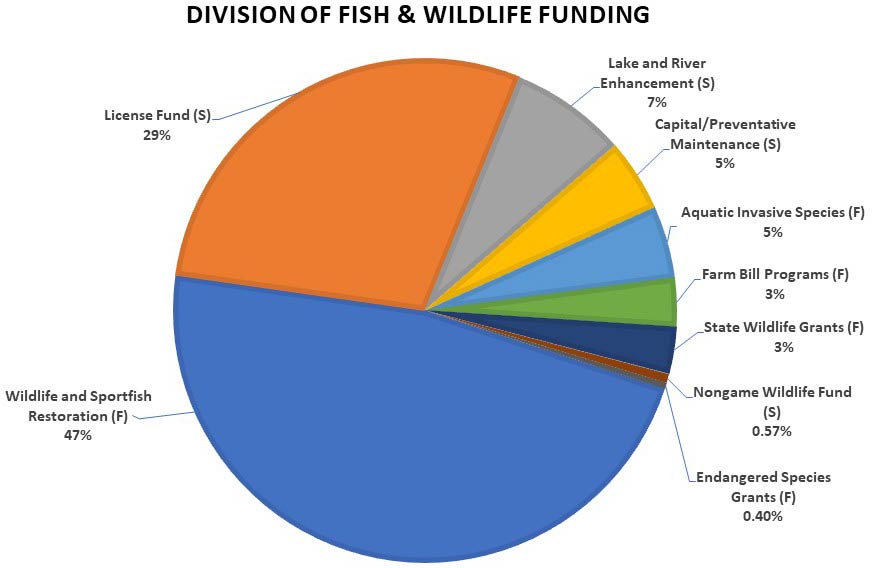
Every time you buy a new rifle, ammo, lures, or fill up your boat for a day on the water, you pay a little extra—generally around 10 percent—to fund fish and wildlife conservation. These excise taxes make up the Wildlife and Sportfish Restoration Program, and they have generated tens of billions of dollars for wildlife restoration projects since 1937. Duck Stamps are to national wildlife refuges as hunting and fishing licenses are to state fish and game budgets. Those hunting and fishing license sales make up the lion’s share of management budgets across the nation. In Idaho, $55 million of their $120 million fish and game budget comes from license revenue. In Indiana, the combination of license fees along with allocations from the Wildlife and Sportfish Restoration Program makes up 69 percent of the state’s fish and wildlife funding. Where would the money come from without hunters, shooters, and anglers? 

Who Would Find the Bodies? 

Hunters have a knack for stumbling upon the decomposing remains of fellow humans. In the fall of 2023, hunters found more than a few bodies in the Vermont woods, some of which had gunshot wounds in the head. According to the National Association of Missing and Unidentified Persons System, 600,000 people go missing in the U.S. each year. Sometimes, they go into the deer woods for a quiet spot to commit suicide. Other times, bodies are wrapped up in a tarp and dumped in the woods of South Carolina. If you do stumble across human remains, don’t touch anything. If you can, take a few photos of the area so law enforcement believes you. Mark the exact location, leave, and contact the authorities when you’re back in cell phone range. 

How Would PETA Make Money? 

Here’s PETA’s take on the necessity of hunting: “Hunting might have been necessary for human survival in prehistoric times, but today most hunters stalk and kill animals merely for the thrill of it, not out of necessity. This unnecessary, violent form of “entertainment” rips animal families apart and leaves countless animals orphaned or badly injured when hunters miss their targets.”

Talk about dramatic. Seriously, though, how would these groups feed themselves without a villain? Have you seen the cost of wheatgrass lately? In 2022, PETA received $66 million in contributions. They spent $14.3 million on executive compensation, salaries, and wages. You can’t raise that kind of money without something to rally against. To be fair, PETA doesn’t just rally against hunting. They’re also against humans eating animals of any kind, and they would prefer that we all turn into vegans.  Good luck with that.

Meat grinder

Food Insecurity 

One deer can feed up to 200 people. That’s some serious bang for your buck. Get it? Hunters donate nearly 10 million pounds of game meat annually, which provides approximately 40 million meal servings for hungry people. I certainly don’t see PETA lining up at the food bank with a Ford full of tofu. There is serious food security in wild game. Other research shows that American hunters annually share some 103 million pounds of harvested game meat with family, friends, or others outside their immediate households.

If no one hunted, where would that protein come from? I love flank steaks, but have you seen the cost of meat lately? Why buy the cow when you can get your venison for free? Well, it’s not free because we pay licenses and taxes to fund our fish and game departments (see above). 

If Americans ever stopped hunting, the list of things that would hit the proverbial fan would be vast. These five scenarios are just the tip of the iceberg. Our system of conservation may not be perfect, nor does it please everyone, but that’s hardly the point. For now, we’ve got hunters willing to take to the hills and keep the neighbors and family fed, deer populations down, agencies funded, and ani-hunters mad. That’s good enough for me. 

PJ DelHomme is a writer and editor living in western Montana. He runs Crazy Canyon Media and

Hunting Hearing Protection

Protecting Our Ears In The Field: The Overlooked Necessity

I was introduced to firearms at an early age. My Christmas present as a nine year old was a youth .22 long rifle. I shot my first pheasant at 10 years old on a game farm. I grew up in a culture of handling guns of all different calibers – from shotguns to rifles. From sighting in our rifles for deer season to shooting five stand, my family always emphasized hearing protection. However, when we went into the field to chase everything from deer to rabbits, hearing protection was an after thought. As I’ve grown older, I’ve realized hearing protection is an essential, yet often overlooked aspect of hunting for many hunters. We put an immense emphasis on handling firearms properly, and we spend money on the best gear we can afford to withstand the elements; however, protecting our hearing often falls by the wayside. The sound of gunfire, although a familiar part of hunting, poses a significant risk to our hearing over time. Exposure to these loud noises can lead to permanent hearing damage , subtly creeping up on hunters as they age. According to the National Council On Aging, about 40 million American adults between the ages of 20–69 have hearing loss caused by excessive noise exposure. Art Diaz from Alclair Outdoors, was recently on an episode of the UpDuck Podcast and discussed this topic as well as the innovative technology available to hunters today to help protect against hearing loss.

Hunting Hearing Protection

Today’s Hearing Protection Technology

Diaz, grew up in California, has incredible photography skills, and has a background as a musician. Wearing hearing protection as a musician is commonplace, as Diaz shared, and his goal when he started working with Alclair Outdoors was to bring his experience as a musician wearing hearing protection to the field. He wanted to improve his hunting experience, and safeguard his hearing without sacrificing environmental awareness. Alclair Outdoors specializes in creating custom-fit hearing protection for outdoor enthusiasts. This is what drove him to help build customized, high tech options for hunters. Unlike the basic earplugs that muffle all sounds, today’s hearing protection equipment is designed to filter harmful noises while allowing hunters to hear ambient sounds, such as the movement of game or the conversations of fellow hunters. This balance is crucial for maintaining situational awareness while hunting, ensuring both safety and success. One of the many questions I had was if the technology would allow me to hear soft sounds such as wing beats, conversations next to me, and the soft crunch of grass as a deer approaches. Diaz explained that his experience as a hunter and understanding what hunters like myself wanted to hear, is what allowed him to help build the innovation into the lineup of hearing devices Alclair Outdoors offers. One of the UpDuck podcast cohosts, Matt Jeske, bought a pair of ear plugs from Alclair Outdoors. On several episodes of the UpDuck Podcast he referenced his ability to hear conversations of other hunters in the blind with him, and the protection afforded after firing over 300 rounds in a day during a guided Mexican duck hunt.

Hunting Hearing Protection

Custom-fit for Comfort and Efficiency

Diaz emphasizes the importance of custom-fit devices for hunters, which offer unmatched comfort and efficiency. Custom-fit earplugs are molded to the unique contours of the user’s ears, providing a perfect seal against noise while staying securely in place, regardless of the hunter’s movements. This personalized approach not only enhances protection but also ensures that hunters can wear their devices for extended periods without discomfort.

One significant barrier to widespread adoption of high tech hearing protection among hunters is the perceived inconvenience of obtaining custom-fit devices. Diaz demystifies this process, explaining how simple it is to get fitted for Alclair’s products either at their facilities, trade shows, or through audiologists. A hunter needs to have a mold made of their ear via a puddy-like impression material. This mold is then sent off to Alclair Outdoors or another manufacturer. At an audiologists office, the appointment to create the molds can be completed in 15 minutes and the cost, while insurance dependent, isn’t typically over $100. While the process can seem daunting at the start, it is much simpler than it initially appears, and it’s hard to put a price on the benefits of hearing preservation.

Flambeau Gunning Series Mallard Decoy - 6 pk.

A Shift in Perspective

There’s another piece of the conversation, and that is the cultural shift needed within the hunting community around hearing protection. Just as hunters have embraced advancements in gear and safety equipment, there’s a growing need to prioritize hearing protection. High-quality, custom-fit earplugs should be viewed as essential gear, akin to a reliable firearm or a sturdy pair of boots. Hearing protection is not just about preserving our ability to hear; it’s about maintaining our quality of life. Putting venison in the freezer, dropping a big rooster after my dog does his work, or shooting a few ducks are wonderful memories. Being able to share those stories and hear stories from other hunters throughout the rest of my life is even more important. While I spend a good amount of time thinking about hunting, the majority of my time is spent at my job, with my family, and living a regular life. For me, I don’t want the 1% of time spent in the field affecting the other 99% of of the life I live. As the hunting community becomes more aware of the importance of hearing protection, it’s hopeful that more individuals will take the necessary steps to safeguard their senses. I know I will be when hunting season approaches this fall.

Jared Scheffler a modern day Fred Bear

Jared Scheffler: The Fred Bear of the Modern Hunting World 

Exploring Jared Scheffler’s Revolutionary Approach to Hunting in Today’s Hunting Era

I’ve been watching the Whitetail Adrenaline DVDs since they first came out, and I might have been one of their number-one fanboys. Years ago, I used to show customers scenes uploaded to YouTube at a computer retailer where I worked. When I started podcasting in 2013, Jared Scheffler was my first podcast guest, and I was nervous about interviewing him. Of course, he was just as humble back then, and it was an “okay” first episode. 

Fast forward 10+ years when Jared Scheffler, the mastermind behind Whitetail Adrenaline, recently hopped on the Okayest Hunter podcast; it wasn’t just another episode but one that should leave you feeling inspired and motivated to be a deer hunter. It was a deep dive into the essence of hunting with a man I believe to be the Fred Bear of our time. Scheffler is a beacon of raw, unadulterated hunting adventures in an industry teeming with scripted hunts and predictable narratives, much like Bear was in his time.

A Legacy in the Making

With Scheffler’s vision, Whitetail Adrenaline has shattered the mold of traditional hunting content. By embracing the unpredictable chaos of unscripted, public land hunts, Scheffler has carved a niche that resonates deeply with the hunting community. His narrative isn’t just about hunting; it’s about the adventure, the unpredictability, and the sheer joy of the pursuit—echoing Fred Bear’s legendary spirit in a digital age. Of course, when things are unscripted, sometimes, s*** happens. Some of the blunders Whitetail Adrenaline documents are not only highly relatable, but they’re also gut-busting hilarious. 

Scheffler said on the Okayest Hunter podcast,

“I liked the idea of the customer paying for it. I remember it being very important to me in the beginning. I felt that held me to a standard that I had to produce something that was worthwhile that people were going to pay for and were willing to pay for. So that kept me in check to produce a better quality product.”

This quote reflects Scheffler’s commitment to quality and authenticity. He ensures his content genuinely resonates with his audience and values their support and investment in his work. When you watch the DVDs, this is extremely evident.

Mastering the Craft Against All Odds

Scheffler shared his epic saga of battling the digital wilderness, from YouTube’s capricious monetization policies to the turbulent world of sponsorships. Opting for DVDs in a streaming-centric world, Scheffler’s Whitetail Adrenaline thrives by setting its own rules, much like Bear did by pioneering bow hunting when it was considered obsolete. When Jared was getting his start, he drove to local hunting retailers to sell his DVDs on their shelves. Scheels was one of his first retailers. This was a big feat, considering DVDs were on their way out then, and even the big-name hunters weren’t selling in retail as they transitioned to connected TV. You gotta admire the grind and hustle of someone like Scheffler pursuing what he loved. That same grind, hustle, and unwavering work ethic is also imbued throughout the Hunts Whitetail Adrenaline documents. 

The Art and Philosophy of Hunting

Scheffler isn’t just about the how-tos; he’s about the whys. His insights into hunting strategies, from open terrain to dense timber, are not just tactics but philosophies. He teaches us that to understand hunting truly, one must embrace failures, adapt, and continually refine one’s approach. In a world filled with how-to content in hunting podcasts and YouTube channels, it’s an entirely different angle to learn from Scheffler simply by watching him in his element out in the whitetail woods. It reminds me of the adage, “Do as I do, not as I say.” <– I might have inverted this saying, hmm? You get the idea. Learning through osmosis is a powerful addition to all the how-to content we consume as whitetail hunters thirsty for knowledge to improve our craft season over season. 

More Than Just a Hunter

The impact of Whitetail Adrenaline extends beyond thrilling hunts; it’s about building a community that values authenticity and relatability. Scheffler’s willingness to showcase the unfiltered realities of hunting—successes, blunders, and all—has fostered a culture of genuine connection and learning among his audience. This authenticity positions Scheffler as a modern-day Fred Bear. Scheffler said in the most recent Uncuffed season, “I’ll shoot a smaller buck if I’m excited about the hunt.” This is a hell of a message to the hunting community in a day and age where monster bucks continue to be the prize hunters are after. Sometimes, as we promote at Okayest Hunter, the thrill of the hunt is worth pursuing. 
The Journey Continues

As the conversation drew to a close, it was evident that Jared Scheffler’s story is far from over. With plans to delve deeper into bow hunting and explore new storytelling avenues, Scheffler is set to continue his legacy, much like Fred Bear did for decades. His journey reminds us that passion, authenticity, and an unbreakable bond with the natural world are at the heart of hunting.

Jared’s appearance on the Okayest Hunter podcast wasn’t just a conversation; it was a declaration of hunting’s enduring spirit, a tribute to Fred Bear’s legacy, and a glimpse into the future of hunting content. As Scheffler continues to innovate and inspire, he solidifies his place as a legend in the making, a modern-day Fred Bear leading the next generation of hunters into the wild unknown with courage, integrity, and a DVD player in hand.

Duck Hunting in Mexico: Planning & Travel Best Practices

There is plenty to plan and think about when taking any hunting trip. If you are traveling abroad to hunt, the amount of planning and detail required to get the most out of your trip is amplified by 10. Recently, I traveled south of the border to Mexico on an unforgettable duck hunting trip with my father. Reflecting on the trip, there are a number of suggestions I’d make to other hunters looking to make a trip to Mexico or any other foreign country.

Cinnamon teal duck hunt in Mexico

Plan and Book Early

If an international trip is for you, consider planning early. For this trip, we utilized a waterfowl hunting booking agency that books directly with the outfitter in Mexico. The agency handled that side of the trip reservations, while we were responsible for the flights in and out of the country. The main lodge held 10-15 guests per slot, rotating out hunting groups every five days. With such limited slots and seats available in each slot, booking early for the dates you personally have available is important. 

Pack Light

There is no need to pay for overweight baggage if it can be avoided. Bring enough hunting clothing and gear to be comfortable for your time afield. When traveling abroad, it becomes a challenge to not pack your entire hunting wardrobe when you aren’t sure what the conditions will be. Watch the weather for temperatures and pack for comfort. On this trip other hunters at the lodge wore mid-weight jackets in the morning. Personally, I never wore more than a sweatshirt over a long sleeve shirt.

Over the years, I have learned that less is more. That includes what you’ll wear at the lodge after your hunt. In my experience, no one at the lodge ever cared what I was wearing after the hunt. There was a laundry service available at the lodge as well. If used, you could cut back on clothing and hunting attire even more.


Outfitter Provided 

The lodging and meals were two of the benefits provided by utilizing the outfitter we hunted with. The house was formerly the owner’s childhood home which had multiple bedrooms, a dining room, bar with a seating area, outside seating, and bird preparation areas. Three meals were provided each day with blind food for morning hunts as you got to your hunting spot. Between traveling to and from the hunts each day and the hunts themselves (typically out the door by 4 AM and not back until 5 PM), it was nice not to have to think about what I was going to eat each day. 

Water and drinks were provided daily, and you were always welcome to grab additional water before or after the hunt. Each morning, I would grab a few additional bottles to be sure I stayed hydrated in the Mexican sun. 

Bringing in firearms is allowed and completely acceptable. While we did not bring our own this trip, there were several people at the lodge who brought their own during our stay. Again, planning in advance is necessary, and a hunter needs to follow all TSA requirements. Additionally, you will need to allow extra travel time in the airports in order to accept your firearms upon arrival at each destination. This also requires an extra charge for importing the firearm through the lodge in Mexico. Work with your outfitter and/or booking agent to confirm the process and complete the necessary paperwork. For us, we utilized the firearms provided by the lodge. The Shotguns provided were primarily 1-2 year old Benelli and Berettas that are cycled out of service every few years due to the amount of use. We had no issues with our provided shotguns, and after a morning of shooting, we were comfortable with handling them.

Birds 

Each day the ducks for the entire lodge are collected and donated locally. It is a good way to utilize the birds that cannot be consumed or brought back to the US in such numbers. 

Duck Hunt in Mexico ducks

Most species of ducks are able to be brought back to your taxidermist if you choose to do so. You must ensure you have the correct paperwork during this process. Work with your booking agency and outfitter to be sure all Mexican and United States laws are followed to import your birds. I would suggest utilizing the 2-gallon freezer bags to seal your birds and freeze them for travel. We utilized a medium sized collapsable cooler bag to transport birds as a carry-on item, while others choose to put the frozen birds in a bag within their checked baggage. Either way, you will be visiting a separate check station at the airport upon your return to the United States. 

Upon returning, plan to follow all USDA and USFWS guidelines regarding taxidermy and care of imported birds. When coming back to the US, you’ll need to go through a U.S. Department of Agriculture (USDA) checkpoint and review your birds with the U.S. Fish and Wildlife Services (USFWS) where you will need to have your birds clearly identifiable. We had ours wrapped in shrink-wrap with the proper tags as suggested by the outfitter, and while that packaged the birds nicely for travel, it made it difficult to unwrap and show USFWS while trying to make connecting flights. With this process, a minimum of two hours for a connection is highly recommended. 

Document Your Trip

For many, this hunt could be a one-time, trip of a lifetime. Even if you plan to frequently travel to hunt, document your trip to enjoy afterwards. As I do throughout the fall seasons, I like to take pictures and videos of each hunt, and traveling abroad was no different. For photos and videos, I brought my cellphone, DSLR camera, and GoPro camera (with extra SD cards) to utilize and remember the hunts. I came back with hundreds of photos, and dozens of GoPro video clips which I am still sorting through. 

Duck hunt in Mexico landscape

I also typed notes and reminders in a note on my phone, which will be useful in remembering details about the trip in the future. Anything from the location of the hunt, weather, other hunt or travel specifics, and how many and which types of birds were harvested each day.

Enjoy the Adventure

While on your trip, enjoy the entire experience. Get to know your fellow hunters at the lodge. Everyone comes from different parts of the country, has unique experiences, and hunts different species all around the world. Really get to know your driver/guide for the week. It is more enjoyable to get to know them on a personal level, and you might never know when they can do something above and beyond for you as a visitor. 

If you have time, have your driver/guide take you out and enjoy the local food. Other hunters at the lodge had gone out with their guides on previous trips to experience the best local food and drinks. While we did not have this opportunity, we would make time for it on a future trip back.

In reviewing my trip, preparation was the key for experiencing a rewarding and memorable hunt in Mexico. When you take on this type of adventure, plan early, pack light, properly prepare your birds, document your trip, and enjoy the entire experience. You won’t regret it.

Hunting laws

How Non-Hunting Laws Impact the Hunting Industry

The hunting industry operates within a complex legal and regulatory framework.

What do Energy Regulation and Cybersecurity Laws Have to Do with Hunting?

The hunting industry, steeped in tradition and driven by a community of passionate enthusiasts, operates within a complex legal and regulatory framework. This framework is influenced by direct legislation and many laws in areas like environmental policy, energy regulation, cybersecurity, and public infrastructure. While the National Law Review’s trending section might not spotlight hunting-related laws, it’s a treasure trove of insights on legal domains that indirectly yet profoundly impact the hunting sector.

Forest ranger

Environmental and Energy Laws: A Conservation Catalyst

Environmental and energy legislation, at first blush, appears distantly related to the hunting ethos. Yet, these legal domains are instrumental in preserving the ecosystems vital to the industry’s sustainability. “Laws like the Clean Water Act and the Endangered Species Act play an unexpected, yet pivotal role in maintaining the health of habitats crucial for game populations,” notes a policy analyst in a discussion on conservation laws’ impact on hunting (Smith, Environmental Conservation Journal, 2023).

The intersection of energy policy and hunting is equally significant. While the push for renewable energy sources is beneficial on a global scale, it necessitates careful consideration of wildlife habitats. “Renewable energy projects must strike a balance between sustainable development and conservation needs, ensuring that hunting practices can adapt to changing landscapes,” states an energy policy expert during a webinar on renewable energy’s environmental implications (Doe, Renewable Energy and Conservation, 2023).

Cybersecurity: Protecting the Digital Frontier of Hunting

If you’re an AT&T customer, you might remember a national outage a few weeks ago that left thousands of customers unable to call or text without being connected to wifi. Moreover, Meta reported a global outage for all its Facebook and Instagram users the other day. These large-scale outages are becoming more commonplace in our modern age of technology. The relevance of cybersecurity in hunting might soon become apparent, yet the industry’s growing digitization from wildlife tracking to permit applications brings it to the forefront. “The integrity of digital tools in wildlife management is paramount, making cybersecurity a key concern for the hunting industry,” emphasizes a technology specialist in a report on digital innovation in conservation (Johnson, Cybersecurity in Wildlife Conservation, 2023).

Public Services Infrastructure: The Unsung Hero of Access and Conservation

It is important to consider the role of public services infrastructure in hunting access and conservation. Infrastructure laws that enable access to remote hunting grounds while promoting sustainable land use are crucial. However, this requires a careful balancing act with conservation priorities. According to an infrastructure planner in a study on recreational land use (Williams, Public Infrastructure and Recreational Land Use, 2023), improved infrastructure can benefit hunters. Nevertheless, sustainable development is key. As a conservationist argues in a debate on sustainable development (Anderson, Sustainable Development Forum, 2023), infrastructure projects in hunting areas must prioritize environmental sustainability to preserve these lands for future generations.

Looking Ahead: The Interconnectedness of Law and Hunting

The regulatory landscape for hunting is dynamic, reflecting the interplay between various legal domains and the industry. Staying up-to-date on developments in environmental law, energy regulation, cybersecurity, and public infrastructure is essential for the hunting community. “Understanding the broader legal environment allows us to advocate for policies that support sustainable practices and conservation efforts,” concludes a hunting industry spokesperson in a panel discussion on the future of hunting (Taylor, Future of Hunting Symposium, 2023).

The absence of hunting-specific legislation in the National Law Review’s trending section doesn’t imply irrelevance but points to the complex legal ecosystem influencing the industry. The indirect effects of environmental and energy laws, cybersecurity, and public services infrastructure on hunting underscore the need for a comprehensive approach to navigating the legal challenges within the industry. This holistic perspective ensures the industry’s resilience and adaptability amidst evolving legal and environmental landscapes.

Hunters Getting Involved in the Legal Process

As we’ve traversed the complex legal landscape impacting the hunting industry, it becomes evident that the voices of hunters, conservationists, and industry stakeholders are crucial in shaping the future of hunting sustainably and responsibly. Getting involved in these legal processes is about advocacy and preserving a tradition deeply embedded throughout the US. 

Hunters can engage by staying informed about legislative changes, participating in public comment periods for new regulations, and joining hunting and conservation organizations that lobby for hunter-friendly policies, like the National Deer Alliance, Sportsmens Alliance, NWTF, and plenty of others. Even attending local government meetings where relevant policies are discussed. “Engagement in the legal process allows hunters to protect their interests and contribute to the conservation efforts that ensure the longevity of their passion,” emphasizes a legal expert in environmental advocacy (Miller, Hunters and Conservation Law, 2023). By taking these proactive steps, hunters can ensure that their legacy—and the ecosystems they cherish—can be enjoyed by future generations.

Appendix: Suggested Resources for Further Reading

To find information and resources similar to the fictional citations provided, consider exploring the following types of sources:

  1. Environmental and Conservation Laws
  • U.S. Environmental Protection Agency (EPA): For information on the Clean Water Act, Endangered Species Act, and other environmental regulations. EPA’s website
  • National Wildlife Federation: Offers insights into how environmental laws affect wildlife habitats. National Wildlife Federation’s website
  1. Renewable Energy and Its Impact on Wildlife
  • The U.S. Department of Energy (DOE): Provides comprehensive resources on renewable energy projects and their environmental assessments. DOE’s website
  • Renewable Energy and Wildlife Conservation: A section within conservation-focused organizations’ websites, such as the Wildlife Conservation Society, discussing the balance between renewable energy development and wildlife protection. Wildlife Conservation Society’s website
  1. Cybersecurity in Wildlife Conservation
  • Cybersecurity & Infrastructure Security Agency (CISA): For insights into cybersecurity best practices that could apply to wildlife management systems. CISA’s website
  • International Union for Conservation of Nature (IUCN): Reports on technology’s role in conservation, including cybersecurity concerns. IUCN’s website
  1. Public Infrastructure and Access to Hunting Lands
  • U.S. Forest Service: Information on how public infrastructure projects are planned and executed within national forests, affecting access to hunting areas. U.S. Forest Service’s website
  • Trust for Public Land: Discusses projects and policies aimed at improving access to public lands for recreational purposes, including hunting. Trust for Public Land’s website
  1. Hunting and Conservation Organizations
Photographing your gundog

Taking Better Pictures of Your Gundog

Capturing the essence of your gun dog in action, or at rest after a successful hunt, is an art form – a blend of passion, skill, and an eye for the right moment. On a recent episode of the UpDuck Podcast, professional photographer and videographer Keagan Keddell shared invaluable insights into the world of outdoor and hunting photography, with a special focus on photographing gun dogs.

gun dog photo

Embrace the Journey

Keegan’s journey into photography began with a Nikon D3500, a base model DSLR. His pursuit of capturing the natural, untamed moments amidst the rugged beauty of Alaska allowed him to master his craft in some of the most challenging environments. He continued to seek knowledge and experience while upgrading his equipment before coming back to the lower 48 and beginning his journey into professional photography. Keagan’s story is a testament to the power of dedication, curiosity, and the willingness to learn from every shot, every light, and every shadow.

Dog Kennel

The Art of Photographing Gun Dogs

Photographing gun dogs, especially in the dynamic and unpredictable settings of hunting, requires more than just technical skill. It demands an understanding of the animal, the environment, and the moments that tell a story. Keagan shared several tips for amateurs and professionals alike to enhance their gun dog photography skills:

  1. Understand Your Subject: Knowing the behavior and tendencies of gun dogs, especially your personal dog, can help you anticipate moments worth capturing. Whether it’s the intense focus of a dog on point or the companionship of a tired dog after picking up a limit of ducks, understanding your subject is key.
  2. Rule of Thirds and Framing: Utilize the rule of thirds to create visually appealing compositions. The simplest way to understand the rule of thirds is to open up the camera on your phone, and look at the grid lines that appear. Placing your dog’s eyes along these lines can draw the viewer’s attention. Framing, such as using natural elements or hunting gear, can add depth and context to your photographs.
  3. Embrace the Environment: Whether it’s the golden hues of dawn during a hunt from your duck boat or the technical grounds at a training session, the environment plays a critical role in the narrative of your photography. Use it to your advantage.
  4. Capture the Action and the Stillness: Gun dogs exude a range of emotions, from the adrenaline-fueled retrieve to the calm after a hunt. Capturing both the action and the stillness can provide the full story of your dog’s hunt and life.
  5. Gear Matters, But So Does Your Passion: While Keagan emphasized the importance of understanding your camera’s settings and investing in quality gear, he also reminded listeners that passion is the most crucial element, and the best camera is the one your holding onto. Keep learning and growing your photography skills, and your vision and love for your dog will ultimately shine through in your photographs.
  6. Share Your World: Perhaps the most compelling takeaway from Keagan’s story is his desire to share the beauty and thrill of the outdoor world with others. From his family to all his followers on social media, Keagan likes telling stories that inspire and connect us to the great outdoors and our companions within it using the pictures he takes. Personally, there’s nothing I love sharing more than pictures, videos, and stories of my dogs.
Gun Dog photo

Summing It All Up

Photographing your gun dog is a journey, and one you won’t be disappointed in starting. Our dogs lives are never long enough, and capturing the moments you share afield with them means more as your dog ages. My oldest dog is 7 now, and I wish I had more pictures of him. Whether you’re a seasoned photographer or just starting with your first camera, the key is to start, learn, and never stop looking for those moments. Tell your story. Tell your dogs story. You’ll look back later in life and be glad you did.

Two bucks from bow hunting and gun hunting

The Spectrum of Deer Hunting

Hardcore whitetail hunts vs laidback hunts and the gratification of both

One thing I’ve learned about deer hunting in my life is that no two hunts are the same. There are so many factors that go into a hunt that make it unique. Are you hunting public land or private land, solo or with a buddy, hardcore or more relaxed? Whitetail hunting is definitely on a spectrum. There are a thousand different ways for your hunt to go down. 

I was able to get a taste of this truth this past hunting season. I tasted success twice, but the hunts both unfolded completely differently. The lead up, weapon of choice, and hunt breakdown all varied. I like it like that. Hunting will never get stale but it’s seasons like this last one that keeps you coming back for more. This is the story of my 2023 hunting season. 

The First Buck

I spent the latter half of September and early part of October combing the Mark Twain National Forest in Missouri for a buck. Hot weather and a large acorn crop put a big damper on my early season sightings. From there I decided to try a mid-October bow hunt in Oklahoma. I had been in that area previously and knew that it had a very dense deer population, so my expectations were high. It was quickly learned that warm weather and distant buck sightings would once again leave me empty handed. The calendar was slowly flipping by and my anxiety started to grow. 

I’m used to not harvesting a deer until November, but most years I would have close calls and fairly frequent buck encounters. This year I had virtually none. I felt behind from the start and even though I had quite a bit of season left, I was starting to get discouraged. Missouri and Oklahoma had beat me down, so I decided to try yet another state, Arkansas. 

I was raised in Arkansas and still had connections down there. In fact, I had permission on a nice piece of ground within two hours of my Missouri home. And better yet, I already had an Arkansas hunting license. Saturday, November 4th would be my first chance to get down there and give it a try. With plans made and a desire to make something happen, I was ready to make the trip. 

I pulled into my parking spot early that morning. My dad was going to meet me and hunt a different spot on the farm. I had a short conversation with him and then gathered my gear for the hunt. My bow and backpack felt heavy that morning on the way to the stand. It was probably the extra anxiety I was carrying in with me. After a short walk, I made it to the stand and settled in.

I love the stand I was sitting in. It was a long running island settled between a creek and deep ditch. The big hardwoods to my east and the small food plot to my west often make good travel destinations for the deer. We have harvested several bucks here in the previous years so I was in as good a spot as any to end my season angst. I didn’t have to sit long before I started seeing deer. 

I was treated to some deer activity across the ditch. A spike and two small does stayed out of range but fed on the water oak acorns for almost an hour. It was the longest encounter with deer that I had experienced all season. Those deer fed off out of site and before I could even settle back into the stand, I caught some movement in the food plot about 80 yards away. There was definitely deer out there, I just couldn’t make out what they were. 

I dug my doe bleat call out of my bag and sent a few bleats their way. It was only a few minutes later that the silhouette of a deer entered the woods from the plot. It didn’t take long for me to notice the white antlers dipping up and down as the deer bobbed my way. I got up slowly and grabbed my bow and focused on my shooting lane. I was over 20 ft high in the tree and amongst great cover, so I wasn’t too worried about being spotted. But the comfort in my setup was slowly being replaced by anxiety. 

“I’m finally about to get my chance, so don’t screw it up” I thought. This is the first significant buck sighting that I had all season, squandering it would be detrimental to my confidence. The buck inched closer to my shooting lane. I drew and watched the buck through my peep. He paused for a moment before he took the final steps into the wide open. He was 10 yards and the anxiety started to melt away. I settled the pin and released the arrow. Seconds later I was greeted by the sound of a crash in the distance. I got him. 

The Second Buck 

I was able to ride the high of harvesting my first buck of the season for the rest of November. Hunting became easy after that. I don’t mean it got easier as in the difficulty of finding deer, it became easier on my mental state. I was carrying around the anxiety of possibly not harvesting a buck for the season and that was now gone. I’ve learned that hunting is a lot more fun that way and often more success is to be had. 

After a couple weeks of gun hunting Missouri, I received a text from my buddy in Arkansas, John. We had been texting the last few weeks about getting together for a hunt in Arkansas. Our friendship goes way back and hunts like this have seem to become our annual reconnection. He also farms a couple pieces of ground that offer great deer hunting opportunities. “I got a couple good 8 points down here that we are targeting if you want to come take a stab at one of them” his text read. My answer was simple and direct, “heck yeah!”

I arrived at John’s house on November 26 for our hunt. We gathered our gear as he gave me a quick rundown on the days’ plan. John had already tagged out on two awesome bucks for the year, so I would be the only gunner on our hunt. We had good weather and a good prevailing wind. The only hindrance we had was that we were getting a late start. This happens from time to time, especially as life happens, but we were still confident. 

Usually when I hunt, I am the one in control. I make the plan and carry it out. This hunt was a bit different. John knew the farm and he knew what we needed to do. “Since we are low on time, we are just going to sneak up this old road and check these bedding and travel areas. If we don’t run into anything, I know a spot I’d like to sit for the last hour.” This all sounded good to me considering he knows this place like the back of his hand. 

We took it slow and we eased down the road. He led the way and gave me cues to when to stop and glass. We kept this up for almost an hour before we crossed over into a big field. We spotted a distant doe but it was still a little early for buck activity. John had seen a shooter buck on the other end of the field the night before and had already planned our route. “There is a low field just on the other side of this field that I’ve see so many bucks come out of. I’ve never shot one down there but I’ve always wanted to. So that’s where we are going.” 

Binos

We stepped down into the low field and confirmed there were no deer in it at that time. We settled into some low brushy timber and began to wait. My backpack was next to me and my rifle laid across my lap. I knew it could happen at any moment. But like any time John and I are together we start to relive some old memories. We tried to keep our laughing at a low volume but that can get hard sometimes. But that’s what hunting is about, having a good time.

During our quiet conversation I turned and looked back at the field and quickly noticed a deer standing at 75 yards away. It didn’t take me long to notice the horns on his head. John slowly raised his binoculars to look at the buck. “Shooter! That’s the buck from last night” he whispered. I raised my rifle and waited for the buck to give me a better shot angle. It took what felt like minutes for the buck to present a shot, but when he did, I knew I had to make it count. BOOM! The buck was hit well and only ran 40 yards before piling up in a briar thicket. All we could do was high five and laugh. “Buddy, that was a hunt!” 

No Hunt is The Same

As most deer hunters know, no two hunts are exactly the same, but a successful hunt is always enjoyed. I harvested my two Arkansas bucks this year in completely different situations. The circumstances and events of each hunt were different but I was equally satisfied! I learned a lot from this season and the way it unfolded. 

Everybody’s hunt is different. Some of us hunt public land, some of us hunt private land. Some of us hunt over feeders, some of us hunt over natural sign. Some of us hunt with archery only, and some of us aren’t afraid to pick up the rifle. We don’t have to do it the same way. In the famous words of the Okayest Hunter “My tag, my hunt.” Legal and ethical are the only factors of the hunt that matter to me. Everything else is the dealer’s choice! Hunt hard and have fun, that’s what I learned while navigating the deer hunting spectrum.

Will Bowen, Okayest Hunter Contributor 

Shed Hunting Antlers

The Elusive Prize: Hunting for Spike Shed Antlers

In the realm of shed hunting, bigger isn’t always better. Or, at least, if you’re anything like us, it’s not always what you’re going to find. Welcome to the paradoxical world where finding the small shed antlers from spikes or basket racks turns into a celebratory task, eclipsing the quest for their larger counterparts. This peculiar challenge has a special place in our hearts over at Okayest Hunter, where the thrill of the hunt is celebrated in all its quirky glory. So, grab your gear, and let’s dive into the nitty-gritty of unearthing these hidden gems of the deer woods.

The Art of Finding the Needle in the Haystack

First off, why is snagging a tiny shed akin to finding a four-leaf clover in a field of green? Simply put, small antlers blend in too darn well with their surroundings. If we had a shed for every “branchler” we found, we’d have a shed full of sheds. While a majestic rack from a mature buck might catch your eye from a distance, spotting a spike requires the detective skills of Sherlock Holmes on a good day. But fear not, as the Okayest Hunter ethos is all about embracing the challenge with a smirk.

Spike antler

Timing Is Everything, Almost

To maximize your chances of victory in this game of hide and seek, timing is critical. This is the time to get out and put in the miles for piles! Of course, some deer may still be holding on to their white gold, but with social media’s help, we can see folks finding em’. Deer typically shed their antlers from late winter to early spring, making this the prime season for shed hunters. However, for those tiny treasures, you might want to start your search just a tad earlier. Why? Because every forest critter, from squirrels to porcupines, sees antlers as a calcium-rich snack. The sooner you get out there, the less likely your prize has been turned into rodent chow.

Location, Location, Location

Knowing where to look is half the battle won. Here are some goldmines for small shed antlers that even the most Okayest Hunter can bank on. Of course, don’t put too much stake into what we have to say, this is more so what we see and hear from folks that actually find sheds:

Bedding Areas

Scouring their bedding areas, especially thick cover spots that offer warmth and security can yield surprisingly fruitful results. It’s like checking under the sofa cushions but for antlers. Of course, sometime finding buck bedding can be it’s own unique challenge. 

This video from our good buddy, Derek might help you key in on some buck bedding. 

Find Buck Bedding with Derek Malcore from the Okayest Hunter

Food Sources

Next up, hit the deer equivalent of fast-food joints—where they grab their winter munchies. These include agricultural leftovers, oak flats rich in acorns, and food plots. A well-fed deer is a happy deer, and happy deer drop antlers. Really, though hormones like testosterone play a big role in anters dropping. The testosterone cycle is largely controlled by the change in daylight, which triggers antlers to mineralize and shed their velvet during decreasing daylight and increasing testosterone, and to fall off when daylight increases and testosterone decreases.

Travel Corridors

Deer are creatures of habit, following the same paths like commuters in rush hour. Inspect the edges of fields, wooded trails, and creek crossings. These antler alleyways are prime real estate for shed hunters.

The Okayest Hunter’s Guide to Shed Hunting

Adopting the right tactics can make or break your shed hunting adventure. Here’s how we would approach it if we didn’t suck at it:

  • Walk Slow, Then Walk Even Slower: Patience is the name of the game. Rushing through the woods will only spook wildlife and overlook those camouflaged spikes. Think of it as a leisurely stroll, where every step could reveal a hidden prize.
  • Eyes on the Ground: While it might be tempting to admire the scenic views, remember, the ground is where the action is. Keep your gaze downward, scanning meticulously for any irregular shapes or colors.
  • Bring a Buddy: Two sets of eyes are better than one. Plus, it’s more fun to share the “Eureka!” moment with a fellow enthusiast. Just make sure your buddy isn’t your dog who might see the antler as a chew toy.
  • Gear Up: While you don’t need the latest gadgets, a good pair of binoculars can help spot potential sheds from afar. And let’s not forget a comfortable pair of boots—because there’s no joy in finding an antler if you’re also nursing a blister.

Once You’ve Found Them

Cheers, go crack a couple cold ones! You’ve found a small shed antler, now what? The Okayest Hunter community is all about getting creative and making the most out of every find, no matter the size.

Trophies for the Everyman or woman

Mount that spike or basket rack with pride. It’s a testament to your patience, skill, and slightly offbeat priorities. Plus, it’s a great conversation starter at your next barbecue.

We’ve recently partnered with Rack-Hub to keep our fond memories within our eyesight so we can easily distract ourselves from less important things like work or two-bit conversations with guests. 

Rack Hub RH1

RackHub RHI antler mount

Craft It Up

Turn those sheds into anything from knife handles to jewelry. The only limit is your imagination. And if your crafting skills are as okay as your hunting skills, you might just surprise yourself with what you create. Just try to avoid a trip to the ER. 

Share the Love

One of the best things about finding sheds is sharing the experience with the community. Post your finds, share your stories, and maybe even swap a few antlers with fellow hunters. It’s all about the camaraderie at the end of the day.

Shed Season is leading the charge here, and we’re excited to partner with them to celebrate finding the more diminutive, harder-to-find antlers! More details to come…

Wrapping It Up

Finding small shed whitetail antlers may be a challenge, but it’s one that the Okayest Hunter embraces with open arms and a quick wit. It’s about the journey, the stories, and the sheer unpredictability of what you’ll find—or won’t find. So, whether you return home with a backpack full of spikes or simply a good tale of the one that got away, remember, it’s all part of the great adventure of being an Okayest Hunter. After all, it’s not just about the size of the antler but the size of the experience. Happy hunting!