Monthly Archives: April 2024

Deer in the city

What If No One Hunted? 

By PJ DelHomme 

There is a small but vocal segment of American society that would like nothing more than to see hunting go away. Let’s do it then. Let’s see what might happen if no one hunted in the U.S. 

Hunting is human. We’ve been killing and eating animals long before tofu and smoothies. As hunting has evolved over the eons, it seems only recently that some want to see hunting go away entirely. That’s a bad idea, not simply because I like hunting.

Long before our country even had a name, America evolved with hunting. Native Americans shaped the landscape to suit their hunting needs. Hunting is the basis of the North American Model of Conservation, which, among other things, pays for our bounty of wildlife and ensures wild animals remain on the landscape. Take hunting away, and we will get a whole heap of problems. Here are just a few. 

Deer Apocolypse 

Animal lovers tend to be pro-deer until the deer eat their prized flowers or fly through the windshield. Let’s pick on Iowa for a moment. Iowa has roughly 400,000 deer. “Unchecked, Iowa’s deer herd could grow at a rate of 20 percent to 40 percent each year. At this rate, deer numbers would double in as few as three years,” according to a report by Iowa DNR. The report also says that hunting is the only major source of mortality for the state’s deer population, killing about 25 percent of them each year. Considering that Iowa is already third in the nation for deer collisions, imagine what might happen when the population doubles every three years? Auto insurance is already expensive, and it would be a lot worse without hunters. 

Agencies Would Go Broke 

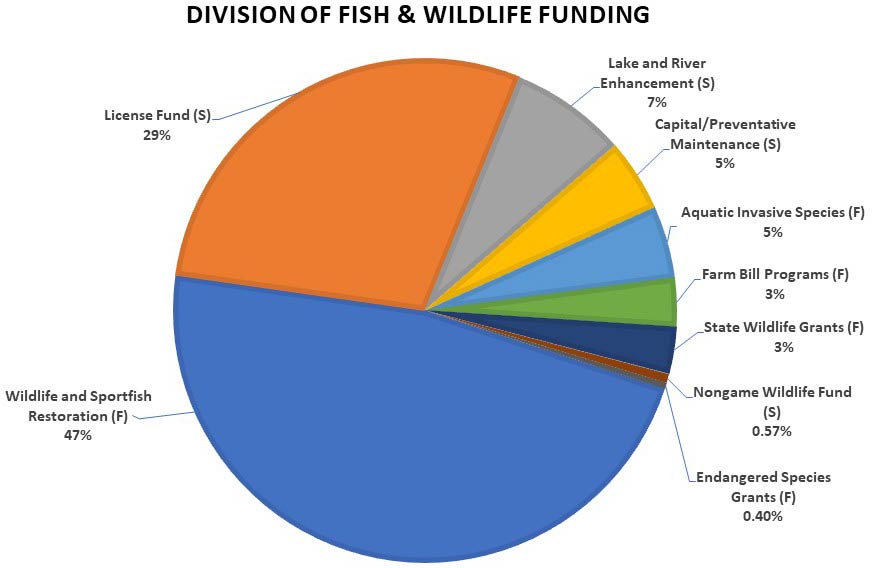
Hunters, shooters, and anglers pay for wildlife conservation in our country. We pay to play. You don’t need a license for so-called non-consumptive uses like birdwatching, backpacking, mountain biking, or camping. Those industries have fought hard for years to keep taxes off of their gear. Here’s the deal. 

Every time you buy a new rifle, ammo, lures, or fill up your boat for a day on the water, you pay a little extra—generally around 10 percent—to fund fish and wildlife conservation. These excise taxes make up the Wildlife and Sportfish Restoration Program, and they have generated tens of billions of dollars for wildlife restoration projects since 1937. Duck Stamps are to national wildlife refuges as hunting and fishing licenses are to state fish and game budgets. Those hunting and fishing license sales make up the lion’s share of management budgets across the nation. In Idaho, $55 million of their $120 million fish and game budget comes from license revenue. In Indiana, the combination of license fees along with allocations from the Wildlife and Sportfish Restoration Program makes up 69 percent of the state’s fish and wildlife funding. Where would the money come from without hunters, shooters, and anglers? 

Who Would Find the Bodies? 

Hunters have a knack for stumbling upon the decomposing remains of fellow humans. In the fall of 2023, hunters found more than a few bodies in the Vermont woods, some of which had gunshot wounds in the head. According to the National Association of Missing and Unidentified Persons System, 600,000 people go missing in the U.S. each year. Sometimes, they go into the deer woods for a quiet spot to commit suicide. Other times, bodies are wrapped up in a tarp and dumped in the woods of South Carolina. If you do stumble across human remains, don’t touch anything. If you can, take a few photos of the area so law enforcement believes you. Mark the exact location, leave, and contact the authorities when you’re back in cell phone range. 

How Would PETA Make Money? 

Here’s PETA’s take on the necessity of hunting: “Hunting might have been necessary for human survival in prehistoric times, but today most hunters stalk and kill animals merely for the thrill of it, not out of necessity. This unnecessary, violent form of “entertainment” rips animal families apart and leaves countless animals orphaned or badly injured when hunters miss their targets.”

Talk about dramatic. Seriously, though, how would these groups feed themselves without a villain? Have you seen the cost of wheatgrass lately? In 2022, PETA received $66 million in contributions. They spent $14.3 million on executive compensation, salaries, and wages. You can’t raise that kind of money without something to rally against. To be fair, PETA doesn’t just rally against hunting. They’re also against humans eating animals of any kind, and they would prefer that we all turn into vegans.  Good luck with that.

Meat grinder

Food Insecurity 

One deer can feed up to 200 people. That’s some serious bang for your buck. Get it? Hunters donate nearly 10 million pounds of game meat annually, which provides approximately 40 million meal servings for hungry people. I certainly don’t see PETA lining up at the food bank with a Ford full of tofu. There is serious food security in wild game. Other research shows that American hunters annually share some 103 million pounds of harvested game meat with family, friends, or others outside their immediate households.

If no one hunted, where would that protein come from? I love flank steaks, but have you seen the cost of meat lately? Why buy the cow when you can get your venison for free? Well, it’s not free because we pay licenses and taxes to fund our fish and game departments (see above). 

If Americans ever stopped hunting, the list of things that would hit the proverbial fan would be vast. These five scenarios are just the tip of the iceberg. Our system of conservation may not be perfect, nor does it please everyone, but that’s hardly the point. For now, we’ve got hunters willing to take to the hills and keep the neighbors and family fed, deer populations down, agencies funded, and ani-hunters mad. That’s good enough for me. 

PJ DelHomme is a writer and editor living in western Montana. He runs Crazy Canyon Media and Crazy Canyon Journal

Modern Day Trapping

Why Are We Still Trapping in the 21st Century?

Trapping, the lost art the modern-day outdoorsmen crave

I would think most hunters and anglers nowadays are familiar with trapping, at least that it exists, but perhaps not a whole lot more. Anyone paying attention to our ever-evolving socio-political climate and the animal rights activists and anti-trapping movement is likely a little more familiar with regulated trapping. Trappers and trapping organizations do a wonderful job at conveying the many benefits of trapping, from disease control, endangered species protection and restoration, reducing property damage, and others, but it still leaves a few questions unanswered. If you’re paying attention here and elsewhere, you’ll notice that fur sales are not readily mentioned in modern-day trapping conversations like they have been historically.


With the rise in animal rights activism, commercial fur farms, and the crash of the fur boom after the peak of fur sales the 1970s and 1980s, the fur market has leveled off leaving fur prices well-below cost-effective margins. Between the cost of equipment and gas, and the price a trapper puts on their time, putting up fur for a profit doesn’t appear to be a major motivator for many trappers nowadays. And with trapping and trappers under constant scrutiny and political pressure, one has to wonder, why are trappers still trapping in the 21st century? To better understand the motivations and rationale that sustains this ecologically beneficial and long standing American recreational pursuit, we’ll look at a few of the primary points that keep modern trappers on the trapline.

Fur and Fur Products


Fur sales and fur auctions will always remain synonymous with trapping, however, in recent years, the prices on fur pelts has dropped off, barely making it economically viable for trappers intent on stretching fur for a profit. In 2024, the fur market is stable and shows a few bright spots, particularly with beaver and bobcat pelts bringing home the most bucks. Many of the most commonly trapped species such as coyote, fox, and raccoon just aren’t worth what they used to be, and worse yet, some pelts, like those of weasel, muskrat, and opossum, are only worth a few bucks on a good day. What’ll happen to fur prices in the coming years is anyone’s guess, but in the meantime, some trappers are staying busy at the sewing machine making their own fur products.
Providing supplemental income to support their efforts, a few savvy trappers are sending their hides off for tanning and then converting them into various fur products. Jackets, hats, headbands, pom poms, mittens, boot covers, earmuffs, capelets, scarves, and even cozies are just some of the fancy fur products still in fashion today. The thick, warm, beautiful fur of beaver, muskrat, mink, otter, red fox, coyote, and other furbearers is as much to look at as it is practical and purposeful. Anyone who purchases and wears these products should be proud to know they’ve contributed to the long and rich history of using natural fur as a long lasting, locally sourced, organic, sustainable, and renewable resource.

Food


Believe it or not, several furbearers offer a healthy and appetizing source of animal protein to supplement one’s diet. There are several species that are routinely trapped and are utilized for their meat, with one of the most common ones being beaver. I’ve yet to try it myself, but I have now heard several accounts of slow-cooked crockpot beaver compared to the finest prime rib. As one of North America’s most prolific and easier-to-catch furbearers, it’s easy to see why trappers have an affinity for beaver meat. With some catches tipping the scales at over 50 pounds, that’s a lot of fresh, lean meat to fill the freezer with. I also have one friend here in Vermont who feeds his pair of elkhounds beaver meat all year long. If you’re into feeding your canine counterparts raw meat or whole foods, trapping can be a serious money-saving strategy.


Muskrats are another species favored for their table fare. Considered a traditional delicacy in the Chesapeake Bay region, muskrats are plentiful and strong reproducers lending themselves to an abundant and reliable source of wild food for many trappers. Their rich, dark meat quarters up easily for stews, soups, and stir-fries. Despite what you might think, racoon is another one that when cleaned and cooked properly can actually taste pretty good … so I am told. Lastly, I’ve heard a few accounts that claim bobcat to be downright delectable. No longer just viewed as a trophy, many trappers (and bobcat hunters) are cooking and consuming the mild meat of these big cats, too.

Predator Management


Ask any turkey, deer, upland, or waterfowl hunter their opinion on factors contributing to the population decline of their favorite quarry of choice, and many will report predation as a main concern. Of course, there is a myriad factors to blame, but it’s no secret that coyotes and wolves prey on elk and deer and nest-raiding, egg-sucking fox, racoon, skunk, and opossum take their toll on ground-nesting birds such as turkey, quail, grouse, waterfowl, and other game birds. Thankfully, regulated trapping shares an ancillary benefit to our favored game species by keeping these predator populations at bay.
While many new trappers will never strive to become the next Jeremaih Johnson, many newbies are coming into the fold with goals of setting a handful of traps to catch a few predators each season in hopes of improving the quantity and quality of their preferred game species. Most hunters are always on the lookout for ways to give back to the sport and for an excuse to spend more time afield, making trapping an attractive and productive addition to their outdoor adventures. Getting started is easy. In most cases, all you’ll need is to complete a trapper education course, a few traps, fur handling equipment, and a desire to learn a new set of skills. Locate a mentor in your area and join them on the trapline this season to see the many benefits of trapping.

Animal Damage Control


Regulated trapping plays a pivotal role in animal damage control (ADC) by providing both lethal and non-lethal means of mitigating human-wildlife conflicts in a highly targeted and humane manner. Trappers use specialized equipment and techniques to selectively catch induvial animals that are causing problems. With ADC, homeowners and landowners hire a professional trapper to come in to assess the situation and use their skills and resources to resolve damage issues, and in most cases, remove and relocate, or dispatch nuisance animals.


This work may include anything from issues with mice, bats, or squirrels getting into an attic, to raccoons and skunks digging under a home, or protecting farmers against crop loss. Trappers are often contacted to thin out or eradicate troublesome beavers that are flooding a property, washing out a road, or falling ornamental trees around a pond. Many times, efforts to remove a dam or unplug a culvert are not enough to stay ahead of industrious beavers, leaving trapping as a viable solution.


Other times, trappers are called in to capture coyotes that have caught and killed the family dog or have been taking out livestock on a farm. As we continue to remove, fragment, and develop wildlife habitat, these interactions with furbearers will continue. Native wildlife populations are learning to not only adapt, but to thrive in urban and suburban environments living among humans with regulated trapping continuing to be a practical, selective, and appropriate method to resolve human-wildlife conflicts.

Tradition


Just like our lifelong love affairs with hunting and fishing, trapping plays a major role in our cherished pastimes and time-honored family traditions. Many individuals have grown up in families where trapping has been an integral part of their narrative and a valued activity that’s been passed down over several generations. Kids that started running the lines with their fathers, uncles, and grandfathers are now adults who continue to carry the torch each fall, and many are now out with their own children in the same places, sharing the same stories, and promoting a sense of connection and stewardship to the wildlife and the habitat.


Many modern trappers have scaled down their efforts since they began as they simply don’t have the time and resources to run a long line anymore. Their desire to be outdoors and connect with the past is so strong they’ll still set a few traps and catch a few critters to feed the fire that was ignited inside so many years ago. For myself and for many trappers, the way we spend our time outdoors is much more than a hobby; it’s a lifestyle, an identity, and something we just have to do. Keeping this longstanding tradition alive honors those who came before us and maintains our bond to our family members and friends who have passed on. Let’s face it, there’s so much more than the technical ability and practical skills of trapping that keep us afield; it’s the kinship, shared knowledge, ethical values, and a love for the natural world that become part of our legacy to pass on to future generations.

Hunting Hearing Protection

Protecting Our Ears In The Field: The Overlooked Necessity

I was introduced to firearms at an early age. My Christmas present as a nine year old was a youth .22 long rifle. I shot my first pheasant at 10 years old on a game farm. I grew up in a culture of handling guns of all different calibers – from shotguns to rifles. From sighting in our rifles for deer season to shooting five stand, my family always emphasized hearing protection. However, when we went into the field to chase everything from deer to rabbits, hearing protection was an after thought. As I’ve grown older, I’ve realized hearing protection is an essential, yet often overlooked aspect of hunting for many hunters. We put an immense emphasis on handling firearms properly, and we spend money on the best gear we can afford to withstand the elements; however, protecting our hearing often falls by the wayside. The sound of gunfire, although a familiar part of hunting, poses a significant risk to our hearing over time. Exposure to these loud noises can lead to permanent hearing damage , subtly creeping up on hunters as they age. According to the National Council On Aging, about 40 million American adults between the ages of 20–69 have hearing loss caused by excessive noise exposure. Art Diaz from Alclair Outdoors, was recently on an episode of the UpDuck Podcast and discussed this topic as well as the innovative technology available to hunters today to help protect against hearing loss.

Hunting Hearing Protection

Today’s Hearing Protection Technology

Diaz, grew up in California, has incredible photography skills, and has a background as a musician. Wearing hearing protection as a musician is commonplace, as Diaz shared, and his goal when he started working with Alclair Outdoors was to bring his experience as a musician wearing hearing protection to the field. He wanted to improve his hunting experience, and safeguard his hearing without sacrificing environmental awareness. Alclair Outdoors specializes in creating custom-fit hearing protection for outdoor enthusiasts. This is what drove him to help build customized, high tech options for hunters. Unlike the basic earplugs that muffle all sounds, today’s hearing protection equipment is designed to filter harmful noises while allowing hunters to hear ambient sounds, such as the movement of game or the conversations of fellow hunters. This balance is crucial for maintaining situational awareness while hunting, ensuring both safety and success. One of the many questions I had was if the technology would allow me to hear soft sounds such as wing beats, conversations next to me, and the soft crunch of grass as a deer approaches. Diaz explained that his experience as a hunter and understanding what hunters like myself wanted to hear, is what allowed him to help build the innovation into the lineup of hearing devices Alclair Outdoors offers. One of the UpDuck podcast cohosts, Matt Jeske, bought a pair of ear plugs from Alclair Outdoors. On several episodes of the UpDuck Podcast he referenced his ability to hear conversations of other hunters in the blind with him, and the protection afforded after firing over 300 rounds in a day during a guided Mexican duck hunt.

Hunting Hearing Protection

Custom-fit for Comfort and Efficiency

Diaz emphasizes the importance of custom-fit devices for hunters, which offer unmatched comfort and efficiency. Custom-fit earplugs are molded to the unique contours of the user’s ears, providing a perfect seal against noise while staying securely in place, regardless of the hunter’s movements. This personalized approach not only enhances protection but also ensures that hunters can wear their devices for extended periods without discomfort.

One significant barrier to widespread adoption of high tech hearing protection among hunters is the perceived inconvenience of obtaining custom-fit devices. Diaz demystifies this process, explaining how simple it is to get fitted for Alclair’s products either at their facilities, trade shows, or through audiologists. A hunter needs to have a mold made of their ear via a puddy-like impression material. This mold is then sent off to Alclair Outdoors or another manufacturer. At an audiologists office, the appointment to create the molds can be completed in 15 minutes and the cost, while insurance dependent, isn’t typically over $100. While the process can seem daunting at the start, it is much simpler than it initially appears, and it’s hard to put a price on the benefits of hearing preservation.

Flambeau Gunning Series Mallard Decoy - 6 pk.

A Shift in Perspective

There’s another piece of the conversation, and that is the cultural shift needed within the hunting community around hearing protection. Just as hunters have embraced advancements in gear and safety equipment, there’s a growing need to prioritize hearing protection. High-quality, custom-fit earplugs should be viewed as essential gear, akin to a reliable firearm or a sturdy pair of boots. Hearing protection is not just about preserving our ability to hear; it’s about maintaining our quality of life. Putting venison in the freezer, dropping a big rooster after my dog does his work, or shooting a few ducks are wonderful memories. Being able to share those stories and hear stories from other hunters throughout the rest of my life is even more important. While I spend a good amount of time thinking about hunting, the majority of my time is spent at my job, with my family, and living a regular life. For me, I don’t want the 1% of time spent in the field affecting the other 99% of of the life I live. As the hunting community becomes more aware of the importance of hearing protection, it’s hopeful that more individuals will take the necessary steps to safeguard their senses. I know I will be when hunting season approaches this fall.